The diary says there’s an hour free. The car already on the ramp needs customer approval, the next customer is halfway to the garage and your only diagnostic technician is finishing a brake job. Suddenly that free hour looks expensive.
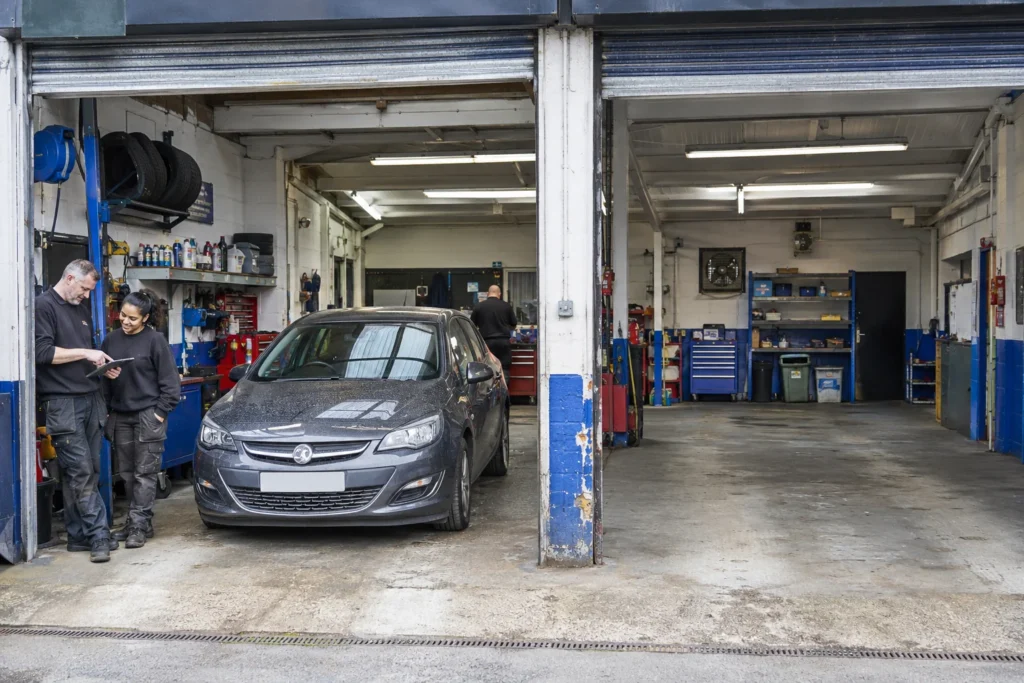
For a small garage, the number of jobs that fit depends on three things. How long each car occupies a bay, when the right technician is available and what has to happen before the customer can collect it. A two-ramp workshop could comfortably book seven jobs in one mix and struggle with four in another. Here’s how to work out a sensible number for the jobs you actually do.
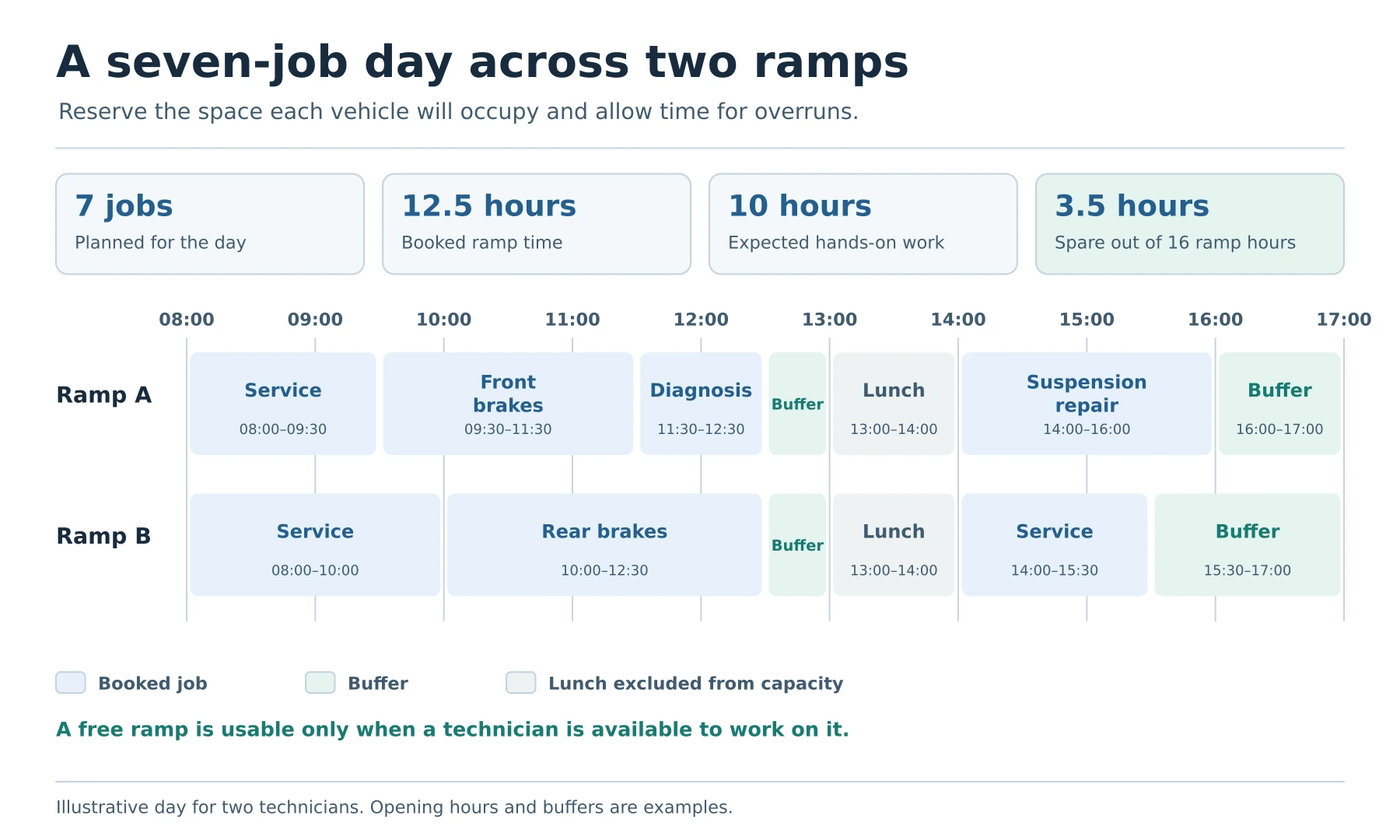
Start with your opening hours, then mark when the lift, the right person and any shared equipment are genuinely available together. If the garage opens from eight to five and two technicians each take an hour for lunch, you have 18 clock hours on the two ramps and 16 technician working hours. If both technicians take lunch together and you reserve that hour on both ramps, the example diary has 16 bookable ramp hours as well. If someone only works until two, redo the figures. A lift can be free at three while the person qualified to do the work is already on the way home.
Give each job two estimates. Expected hands-on time is how long you think a technician needs for the work and its required checks. Ramp occupation runs from when the car needs the bay until you can release the space safely. Allow for getting the vehicle in and out, checks and any known waits that will hold the bay. Your quoted or billed labour time is a separate number. Keep all three visible when reviewing how your estimates performed.
A regular fleet also brings deadlines for putting each vehicle back into service. In its July 2025 survey, Fleet Assist reported that 81% of responding garages expected lead times to hold steady or shorten. That tells you what respondents expected in their own businesses. For your workshop, record how long people wait for a slot and how often you can actually keep the collection time you offer.
Source: Fleet Assist garage survey
Here’s an illustrative day for two technicians, one per ramp. Both work from 08:00 to 17:00 with lunch protected from 13:00 to 14:00. The parts for the planned jobs have been checked, both technicians have the skills for their allocated work and any shared equipment has been reserved. The timings are planning assumptions, so use your own job history when you copy the approach.
| Ramp | Booking | Bay occupied | Expected hands-on time |
|---|---|---|---|
| A | Service, 08:00–09:30 | 1.5 hr | 1.25 hr |
| A | Front brakes, 09:30–11:30 | 2 hr | 1.5 hr |
| A | First diagnostic session, 11:30–12:30 | 1 hr | 0.75 hr |
| A | Suspension repair, 14:00–16:00 | 2 hr | 1.75 hr |
| B | Service, 08:00–10:00 | 2 hr | 1.5 hr |
| B | Rear brakes, 10:00–12:30 | 2.5 hr | 2 hr |
| B | Service, 14:00–15:30 | 1.5 hr | 1.25 hr |
| Total | 7 jobs | 12.5 hr | 10 hr |
Both ramps have 30 minutes uncommitted before lunch. Ramp A has another hour from four, and Ramp B has an hour and a half from half past three. That gives you 3.5 hours of uncommitted ramp time across the working day. Those hours come in separate blocks and on different lifts. A three-hour clutch job still needs a suitable stretch of time and the right technician.
Both technicians also have a combined six working hours outside the expected hands-on estimates. Some of those hours sit inside already reserved bay slots. Allow for advice, parts checks, road tests or other tasks you’ve planned outside a job’s hands-on estimate. Before handing out more work, check what those technicians will actually be doing and whether someone has time to complete the quality check and paperwork too.
Suzuki’s UK aftersales planning guide asks teams to consider overall capacity, technician skills, expected completion and time for quality checks and paperwork when setting a start time. The same questions work in an independent garage. They are particularly useful when reception can see an available ramp but has yet to check who can use it.
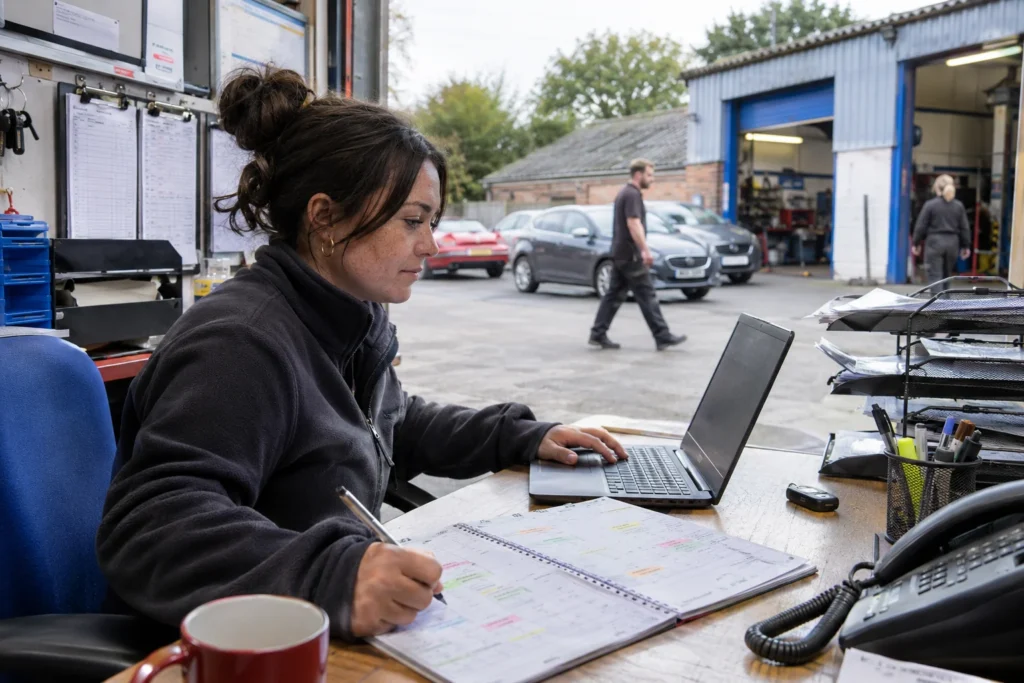
Put predictable jobs where they can anchor the day. A known service with the right parts in stock can suit the first slot. Give jobs with an uncertain diagnosis a bounded first visit and agree when you’ll speak to the customer. That visit might end with a test result, a plan and a later repair booking. Give the adviser a realistic update time and a collection window that reflects the scope agreed.
Start with enough spare time to cope with an ordinary overrun in your shop. Suppose Ramp A’s front brakes take 25 minutes longer. The diagnostic session moves to 11:55 and takes its full hour, finishing at 12:55. Five minutes of the buffer remain, and the workshop can still stop at one. If the overrun is 45 minutes, finishing the session as planned would take you to 13:15. Check what can be done safely before lunch, revise the plan and speak to the affected customer while they can still change their arrangements.
If someone walks in at half past three, first ask what they need and how long the car and technician will be tied up. In the example, Ramp B’s 90-minute window could suit a bounded check with the right person available. Ask about parts, approval and closing time before committing to a repair. A later booking with a clear first step can spare everyone a difficult conversation at five.
A two-ramp calendar still needs a place for cars awaiting parts or approval. Work out which cars can safely wait elsewhere and where those cars can go. Build in time for safe vehicle movement and a clear route for the people doing it. If one vehicle must stay on the lift, treat its hold as a bay booking and reassess the next job. HSE’s vehicle-repair guidance highlights the risks of reversing and recommends separating people from vehicles wherever practicable.
Source: HSE workshop transport guidance
Before confirming the day, check three things with the person running reception.
When one item falls through, protect the promises you can still keep. Reallocate a job only when the other bay, equipment and technician are all suitable. If a customer needs a different time, make the call early enough for them to act on it.
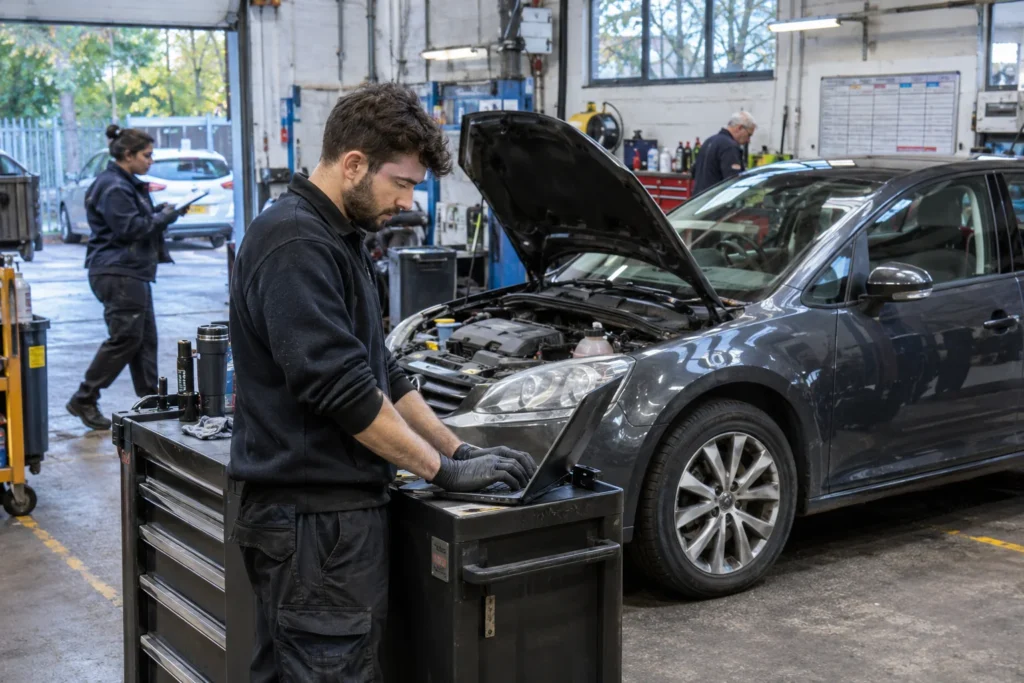
For five working days, log the scheduled start, actual start, when the ramp cleared and when the car was ready. Put a short reason against an overrun, such as wrong part, slow approval, seized fitting or technician called away. Then sort a handful of common job types by how long each really used the ramp. Start with the jobs you see often enough to compare.
If five comparable service slots use 65, 75, 90, 95 and 115 minutes, a 75-minute slot would have run over three times. A 95-minute slot would have covered four of the five on that sample. Look at the 115-minute job before changing the diary. A unique parts problem and a check your team carries out on every service call for different responses. Repeat the exercise as you get more timings.
Also count how often a car clears the bay on time and still misses its collection promise because the invoice, final inspection or handover gets squeezed. A workshop that hits every ramp target but leaves three customers waiting at reception still has something to fix. Give someone ownership of the ready-for-collection time and compare it with what the customer was told.
Once you know the pattern, put it where the team books the work. In Garage Invoice, the Workshop Today calendar shows bookings and job cards by bay. Its Bay Planner layout also shows capacity for the next ten working days. Use that view alongside the technician and parts checks you make before calling a booking confirmed.
Read more: Garage Invoice Workshop Today dashboard · Garage Invoice Bay Planner layout
See where your workshop hours go, or price your time with the free labour rate calculator.
