The technician says the repair is done. Reception has called the customer. At the counter someone asks whether the original noise went away, and the only answer in the job card is “OK”. That’s a long way from a useful handover.

A good sign-off takes the reported symptom, the work the customer agreed and the checks that actually happened, and puts them together where everybody can see them. A road test is one possible check. Decide why it’s needed, whether the vehicle and journey are safe and lawful, and what outcome would change your next decision.
Read the booking before touching the keys. “Front wheel bearing replaced” tells you the work carried out. “Customer reported a hum once the car was warm” gives you the question to answer. Look up the repair procedure and any verification steps for that vehicle. A stationary check, measurements or a manufacturer-specified procedure may be the appropriate way to verify some work. Plan a road test when it adds information or the applicable procedure calls for it and the garage can do it safely.
Make the checks specific to the work. A wheel repair calls for the relevant checks on the wheel and fasteners. A calibration job calls for its required calibration verification and records. A drive around the block may tell you a noise has gone on that route in those conditions. Keep the result that narrow when the trigger was intermittent or conditions were different.
The Motor Ombudsman published a cambelt dispute where its final decision considered the garage’s documented short road test alongside the rest of the evidence. That case turned on the facts and documents of one job. It’s a useful reminder to write down what a test was intended to verify and what it showed.
Source: Motor Ombudsman cambelt case
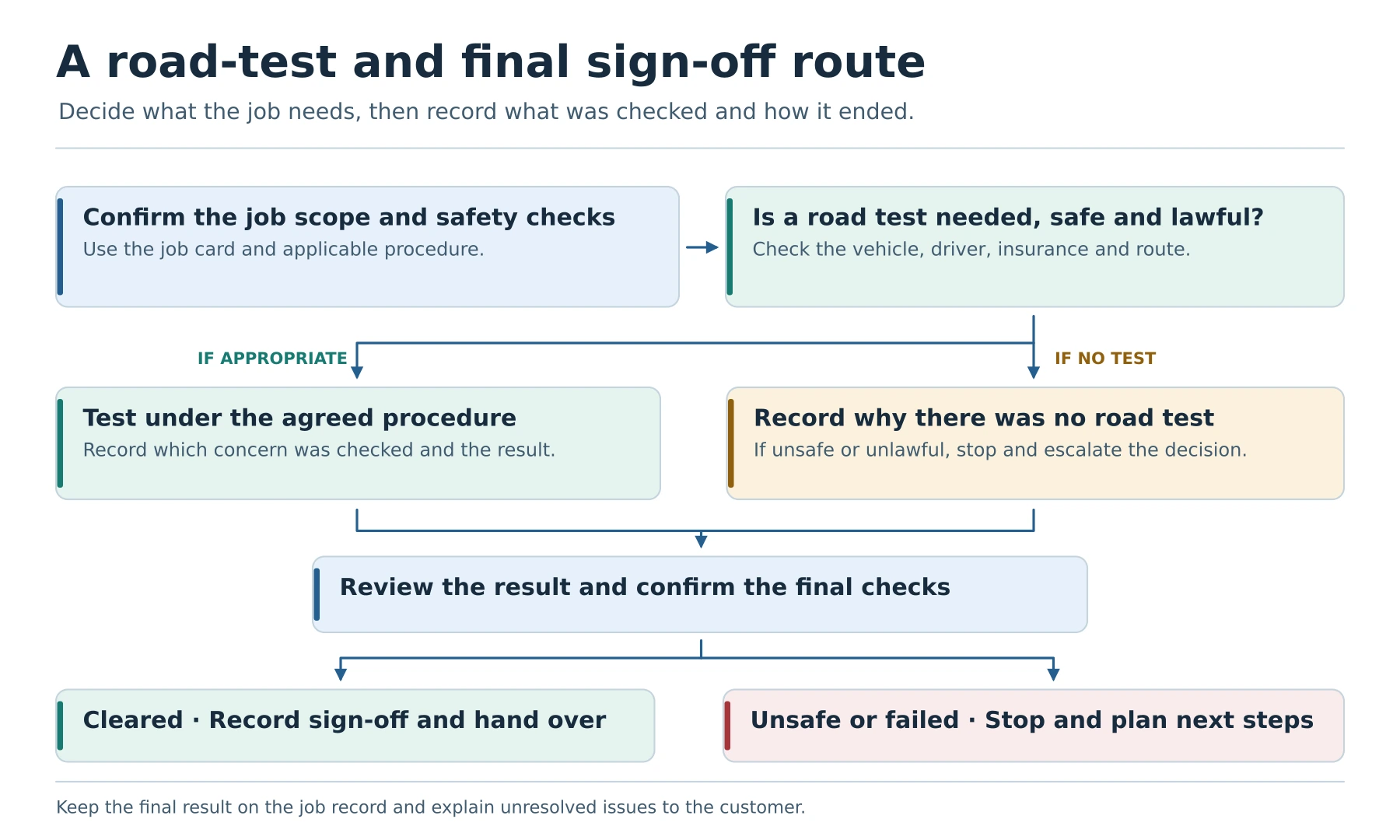
Treat road testing as driving for work. HSE guidance for employers in Great Britain asks businesses to manage the risks around the journey, driver and vehicle. Your procedure can set out who is authorised, who has checked cover and what happens when a proposed route or vehicle is unsuitable. For Northern Ireland road rules, check the local Highway Code and vehicle guidance.
Sources: HSE driving for work guidance · Northern Ireland driving and vehicle documentation
| Before leaving | What to establish |
|---|---|
| Purpose and permission | What you’re checking, whether it’s within the agreed work and that the customer has agreed to the test |
| Driver | Appropriate licence, garage authorisation and familiarity with the vehicle |
| Cover | The garage’s motor insurance covers this driver, vehicle, type of use and any passengers |
| Vehicle compliance | Roadworthy now, with tax and MOT where required or a confirmed lawful exception for the exact use |
| Repair checks | Applicable static checks complete and anything disturbed during the job checked as required |
| Route and conditions | A suitable legal route, weather and traffic considered, and a plan if the symptom returns |
Confirm your actual road-risk cover with your insurer or broker, especially for an unfamiliar vehicle, driver or proposed journey. At least third-party motor insurance must cover the proposed use on the road. Your policy may apply limits to drivers or vehicles and set other conditions. If any legal or safety question remains open, pause the road test while it’s resolved. An expired MOT, even when the customer has arranged a retest, needs specific attention. Confirm that any permitted exception covers the specific journey you are proposing. Where you use trade plates, follow the rules for approved use, roadworthiness, insurance and MOT.
Sources: GOV.UK driver obligations · GOV.UK MOT and retest guidance · GOV.UK trade plate rules · GOV.UK vehicle insurance
Mark a red flag for a known or suspected fault that could make driving unsafe. Brakes, tyres, steering and other safety-critical concerns need a competent assessment. Use suitable workshop checks or agree recovery if required. A vehicle must be roadworthy to drive on the road, including when its MOT is valid. Keep any permitted yard movement within your site’s arrangements for vehicles and pedestrians.
Sources: GOV.UK roadworthiness guidance · HSE motor vehicle repair transport guidance
Pick a route and conditions that make sense for the check. Avoid trying to reproduce a symptom in circumstances that would be unsafe or outside road rules. The driver’s attention stays on driving. If the test needs notes or equipment, set up a safe way to capture them beforehand, use a suitable authorised colleague if appropriate, or stop safely before making a record. HSE guidance covers route planning, time pressure and distraction, and GOV.UK explains the rules for using devices in a vehicle.
Sources: HSE on planning safe journeys · GOV.UK on using a phone or similar device when driving
Agree when the driver should end the test. If a new warning appears, a symptom makes further driving unsafe or road conditions no longer suit the test, get to a safe place when possible and follow the garage’s agreed recovery or escalation procedure. Write down the conditions and what happened before the next decision is made. If the test was skipped, use the same job card to explain why and identify the checks still to do.
Here’s an illustrative example for a job that needs a road test. After the repair, the garage allows five minutes for its go or stop checks, 12 minutes for the drive, eight minutes for the required checks back in the workshop and five minutes to record the outcome. That is 30 minutes in total. Six jobs needing that allowance would take three staff-hours. Build time into the job where your own records show it’s needed. The allowance will vary by vehicle, route, condition and procedure.
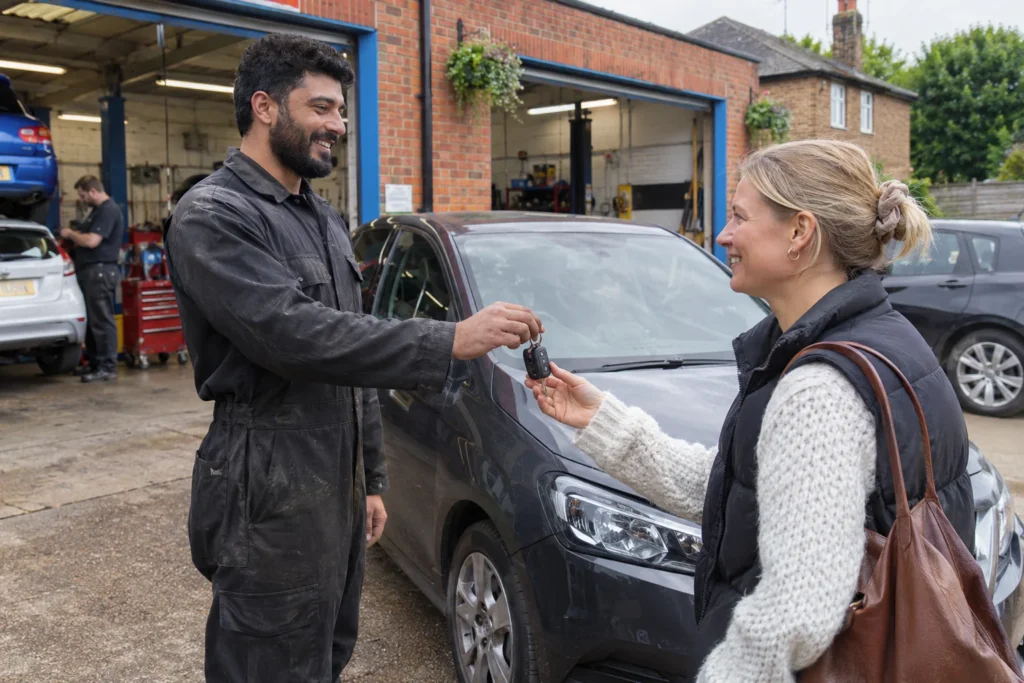
Use a short job record that reception and the technician can both read. Include the result and the basis for it. If further work is needed, agree the scope and any additional charges before proceeding. Arrange a suitable handover with the customer where an issue remains, and explain safety advice in writing where relevant. The Motor Ombudsman’s current code requires accredited businesses to get approval for extra work and to explain the work, charges and applicable warnings at handover. The Consumer Rights Act requires reasonable care and skill for consumer services.
Sources: Service and Repair Code, sections 3.2, 4.4 and 4.5 · Consumer Rights Act 2015, section 49
| Final job record | What to write |
|---|---|
| Work and checks | What was authorised, what was done and the relevant measurements or check results |
| Road test | Who drove, date, mileage or duration, purpose and relevant conditions, or why the test was skipped |
| Original concern | Reproduced and resolved, observed and still present, or not observed under the conditions checked |
| Outstanding items | Any limitation, action to agree, written warning or recovery arrangement |
| Sign-off | Who reviewed the evidence, date and the status reception should act on |
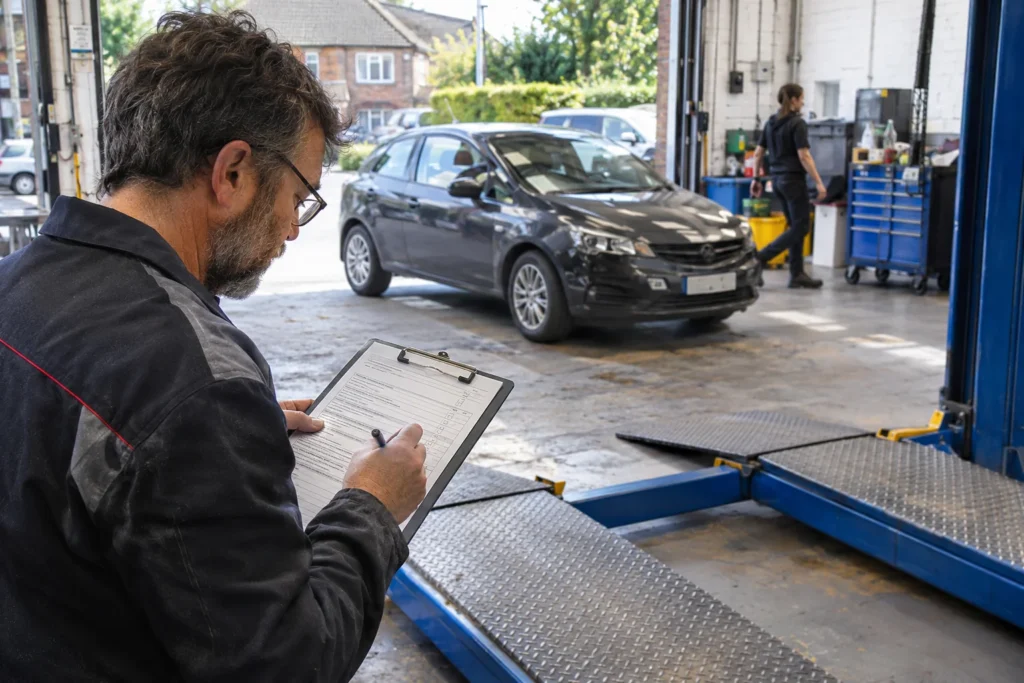
Here’s an example of a handover after a successful check.
We’ve replaced the agreed part and completed the checks for that repair. The hum you reported came up on our first check and wasn’t present on the follow-up drive. I’ve included what we checked on your job record. If you hear it again, let us know when and under what conditions it happens.
If the original fault didn’t appear, use words that say exactly that. If the result is unexpected, hold the ready-for-collection message until somebody has reviewed it and agreed the next step with the customer. Check ten finished jobs next month and see whether you can tell from the records which checks were done. That gives you a quick way to improve the form before making it longer.
Read more: Garage Invoice job card settings
If a car comes back anyway, see how to handle repair comebacks and warranty work.
