You’ve got two cars waiting for a ramp and the phone rings. “That light you fixed last week is back.” The customer wants to know whether they can drive the car and whether they’ll have to pay again. You have an invoice number, half the story and a workshop that’s already full.
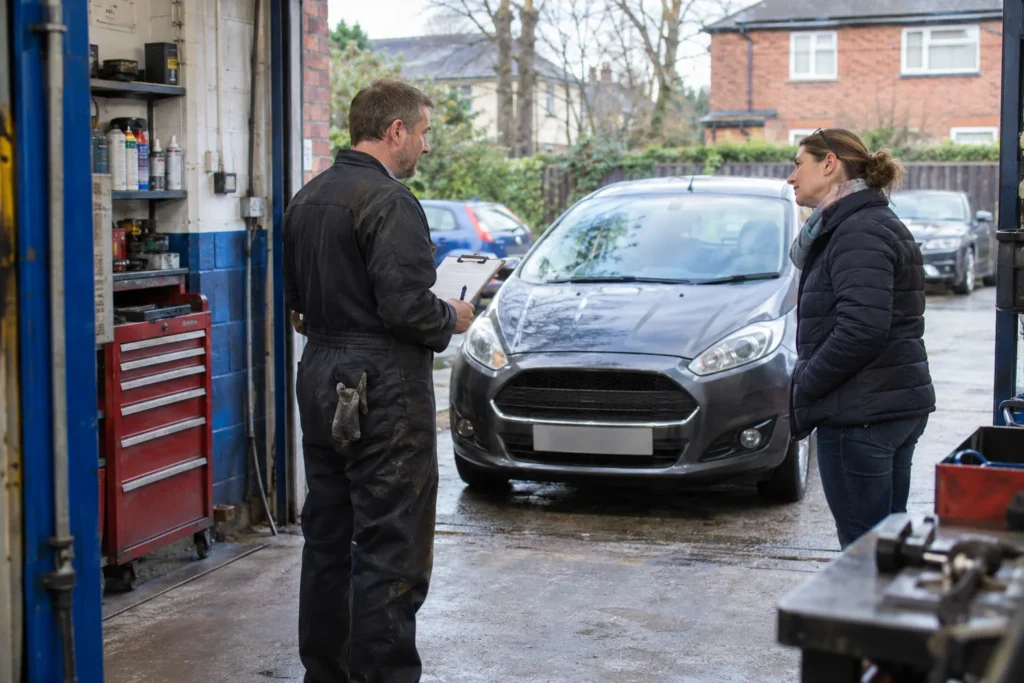
A good comeback process starts with taking the customer seriously and finding out what happened. Get the vehicle assessed safely, pull the original job and work out whether the problem traces back to something you did, something you fitted or a separate fault. The answer determines how you explain the next step and who pays.
Ask what the driver noticed, when it started, whether it happens every time and what they were doing when it happened. Ask about dashboard messages, leaks, smells or changes in how the car brakes or steers. If there’s any doubt about whether it can be driven safely, help the customer arrange an appropriate recovery or inspection. Drivers are responsible for keeping a vehicle roadworthy, and an MOT certificate alone cannot tell you its condition today.
Source: GOV.UK roadworthiness guidance
Give the customer a named contact and a time you’ll call, even if you’re still investigating by then. Anyone on the desk can say something like this.
Thanks for calling. I’ve pulled up your previous job. I’ll get a technician to look at what’s happening and check whether it’s related. I’ll ring you by three tomorrow with what we’ve found or when we expect to know more. We’ll discuss any chargeable work with you before going ahead.
Open a return job card and note the original job number on it. Record the date, current mileage and symptoms in the customer’s own words. Agree what the initial assessment will cover and how you’ll handle any costs if it reveals a separate problem. Keep access to statutory remedies straightforward. Where you agree a charge for investigating unrelated work, make its terms clear up front.
Source: Trading Standards guidance on motor vehicle servicing and repairs

Give the technician the original symptoms, quote, authorisation, invoice, part numbers, supplier details and measurements. Save current fault codes and relevant observations before resetting anything that could clear the evidence. Arrange for someone else to review the findings if the cause is unclear or the return involves a safety-critical repair. Keep removed parts labelled and speak to the supplier or warranty provider before you return or dispose of anything they may need to inspect.
A customer paid for a repair after the engine management light came on. The first job card records the part fitted and the tests that supported the diagnosis. Two days later the light comes back. The dashboard looks identical to the driver. Here’s how three possible findings would change the conversation.
| What the evidence shows | What to do |
|---|---|
| A connector disturbed during the work was left unsecured. | Explain what happened, put the original work right as applicable, and check and record the result. |
| The replacement component supplied by the garage failed. | Record the test evidence and the part details. Deal with the customer’s entitlement and submit the supplier claim as a separate step. |
| Tests point to a separate fault unrelated to the first repair. | Show the customer what differs and give a clear diagnosis or repair quote. Get approval for any chargeable next step. |
If the cause is still open, tell the customer what you’ve checked and what evidence would let you make the call. Give them a time for the next update. A short gap between visits deserves a proper look. The evidence is what tells you how the two jobs are connected.
A clear record of the first visit makes a comeback easier to judge. The free job card template keeps the problem, work agreed and findings together.
Consumer repairs must be carried out with reasonable care and skill under the Consumer Rights Act 2015. When a consumer is entitled to repeat performance, it must be done within a reasonable time, without significant inconvenience and at the trader’s necessary cost. If repeat performance is impossible, or the trader fails to do it within a reasonable time and without significant inconvenience after being asked, an appropriate price reduction may be due. A guarantee you offer can add protection alongside these rights. If the customer is a business, or booked the work mainly for business purposes, the Consumer Rights Act may not apply, so check which terms cover the job.
Sources: Consumer Rights Act 2015, section 49 · Sections 55 and 56 on repeat performance and price reduction · Motor Ombudsman Service and Repair Code
When your garage supplied the part, deal with the customer’s statutory remedy on its own timetable and document the supplier claim separately. For an extended warranty, check who authorises the claim, the excess, how much labour is covered, and who pays for diagnostics or dismantling if the claim is declined. Get the required authorisation before work starts. Keep the customer informed about costs they may have to approve. When the customer brought the part, investigate the installation and the component separately. Your duty to perform the fitting with reasonable care and skill still applies.
Sources: Trading Standards guidance on motor vehicle servicing and repairs · Motor Ombudsman Code, paragraphs 3.13 and 3.14
Keep a workshop record even if you charge the customer nothing. For example, a return visit that takes 90 minutes at an illustrative internal labour cost of £40 per hour, with a £55 part and £5 of consumables, costs £120. If the supplier credits only the part, the garage still carries £65. Keep the credit separate so you can see what the job cost and what you recovered.

Finish with a plain written account of the concern, findings, agreed action and final price or remedy. Include any further instructions and the contact for questions. If there’s a formal complaint, log when it was raised, keep the relevant records and explain your decision and escalation route in your final response. Write the findings so a colleague who wasn’t there could read them and understand how you reached the decision.
The Motor Ombudsman publishes how many service and repair cases it handles each year in its annual report. Those are scheme-wide figures. Your own job and return records give you the figures for your workshop. For accredited businesses, customers can generally approach The Motor Ombudsman after the business sends its final response or eight weeks have passed without a resolution, subject to the scheme’s rules. A prompt update is easier to deliver than a final answer and still tells the customer someone owns the problem.
Sources: Motor Ombudsman 2024 annual report · Motor Ombudsman complaints guidance
When your garage is putting a repair right, a useful handover is specific. “We found the connection had worked loose, secured it and checked that the fault cleared. There’s no charge for today’s work” gives the customer a clear record. If the final finding is a separate fault, show them the evidence and send a fresh quote for the work they can choose to approve.
Track returns against the original jobs. Use a few consistent categories such as workmanship, supplied part, unrelated fault and cause still under review. Measure how many original jobs in a group led to a confirmed, related return, using the same time window each month. For example, of 180 repair jobs completed in May, five had a confirmed related return within 30 days of collection. Once all 180 have had the full 30 days, the rate for that group is 2.8%. That’s a fictional example to show the calculation.
Review where the costs are concentrated. Three early failures of the same part might justify checking supplier or batch records. Repeat reports of a fault that only happens from cold might be a reason to keep the car overnight and test it before the engine warms up. Pick one change you can make on the next job, then see whether the pattern improves. Start the return job card from the same vehicle record and note the original job number on it, so the evidence stays easy to find.
Read more: Creating job cards from vehicle records in Garage Invoice
