A customer needs a clutch, the car will be with you for two days, and they have a school run to do. They’re happy with the quote. Then they ask whether you have anything they can drive home. One courtesy car might win that booking. It might also be out for a week with the last customer, waiting on a part that still hasn’t arrived.

The decision comes down to the cost of a day the car is actually used and how many profitable jobs it helps you keep or win. Start there, then check who can drive it, how the keys move, and what happens when two jobs need it at once.
A Fleet Assist survey of businesses in its service, maintenance and repair network, published in July 2025, found that 21% of respondents planned to grow their courtesy vehicle fleet and nearly half expected their provision to stay the same. The sample comes from a fleet-focused network, which is a useful signal about transport needs for that part of the market. Work from your own booking diary when estimating take-up.
Source: Fleet Assist’s 2025 workshop network survey
For a month, ask what happens when a customer needs transport while their car is in. Record which jobs would go ahead anyway, which would move to another date and which you’d genuinely lose. Note likely return times and how long people need the vehicle. Three requests every Monday can be worth less than three spread across a week when you’ve only got one car.
The Motor Ombudsman says a courtesy car is discretionary for businesses accredited under its Service and Repair Code. If you promise a car as part of a particular booking, make that arrangement clear. Tell the customer what they’ve reserved, any charges, and who will contact them if the vehicle becomes unavailable. An insurer may arrange a replacement vehicle under its own policy terms.
Sources: The Motor Ombudsman on garage courtesy cars · Financial Ombudsman Service guidance on insurance repairs
Look up what other garages publish to see what a customer may expect. On 15 November 2026, LMC Auto Services listed a £12 fee including VAT and asked customers to replace the fuel they used. Auto Motive Service and Repair listed £18 per day for its courtesy service, including insurance and up to 20 miles of fuel, with a charge for additional mileage. These are examples from individual garages. Their offers cover different things, and their costs are unknown.
Sources: LMC Auto Services courtesy cars · Auto Motive courtesy-car charges
An independent garage buys a used hatchback for £6,500 and expects to sell it for £3,500 after three years. It estimates 120 days on loan each year across 60 handovers, with an average loan of two days. These are example figures. Put your insurance quote, expected resale value, bills and realistic use into the same calculation.
| Cost or use | Worked example |
|---|---|
| Annual value lost over three years | £1,000 |
| Additional annual insurance | £800 |
| Vehicle tax and MOT | £220 |
| Servicing, tyres and a repair allowance | £500 |
| Parking and breakdown cover allowance | £300 |
| Annual fixed cost allowances | £2,820 |
| Staff time and cleaning at £12 per loan | £720 |
| Annual total at 120 loan days | £3,540 |
| Cost for each day used | £29.50 |
The cost per day falls as bookings increase. With the same fixed costs and two-day average, 60 days on loan would cost £53 per day. At 180, it would be about £21.67 per day. Add interest or a finance cost if it applies and check any finance or lease terms allow courtesy use. Allow for extra fuel, damage claims or downtime if your figures leave those out.
Suppose the garage retains £10 per day from a customer charge after any VAT due. Across 120 days that contributes £1,200, leaving £2,340 to cover. If a job you’d genuinely have lost adds £90 after the direct costs of doing it, it takes 26 extra jobs a year to cover the remainder. With zero fee income, the same £90 contribution would need 40 extra jobs to cover the £3,540 total. Keep the fee and job figures on the same tax basis. Count a customer as an extra job only when the evidence suggests the courtesy car made the difference.
Ask a broker or insurer to confirm in writing that your arrangement covers lending the vehicle to customers. Ask which drivers qualify, who checks them, which journeys are covered, what the excess is and how renewal, extensions and incidents are handled. Confirm what cover is needed for any additional driver. A customer’s own policy might offer cover, but you need to check that the actual vehicle, intended use and dates fit the arrangement you’re relying on.
Sources: GOV.UK vehicle insurance overview · The Motor Ombudsman on courtesy car insurance
Set a licence-check procedure that matches your insurer’s requirements. With the driver’s permission, there are separate official services for checking Great Britain and Northern Ireland driving licences. Collect only the records you need to verify eligibility and operate the loan. Store them securely and decide how long to keep them. Make sure your car meets the applicable requirements for tax, MOT and safe use on the road.
Sources: DVLA licence checks · Northern Ireland licence checks · GOV.UK legal obligations of drivers · ICO data minimisation guidance
Show the customer the price and terms before confirming the booking. Cover the agreed return time, mileage, fuel or charging, accident procedure and any potential charges. Give the driver a copy and explain important limitations while they have time to ask about them. Make any mandatory upfront charges clear in the price and use fair terms, especially for damage and late returns.
Sources: CMA price transparency guidance · CMA guidance on writing fair terms
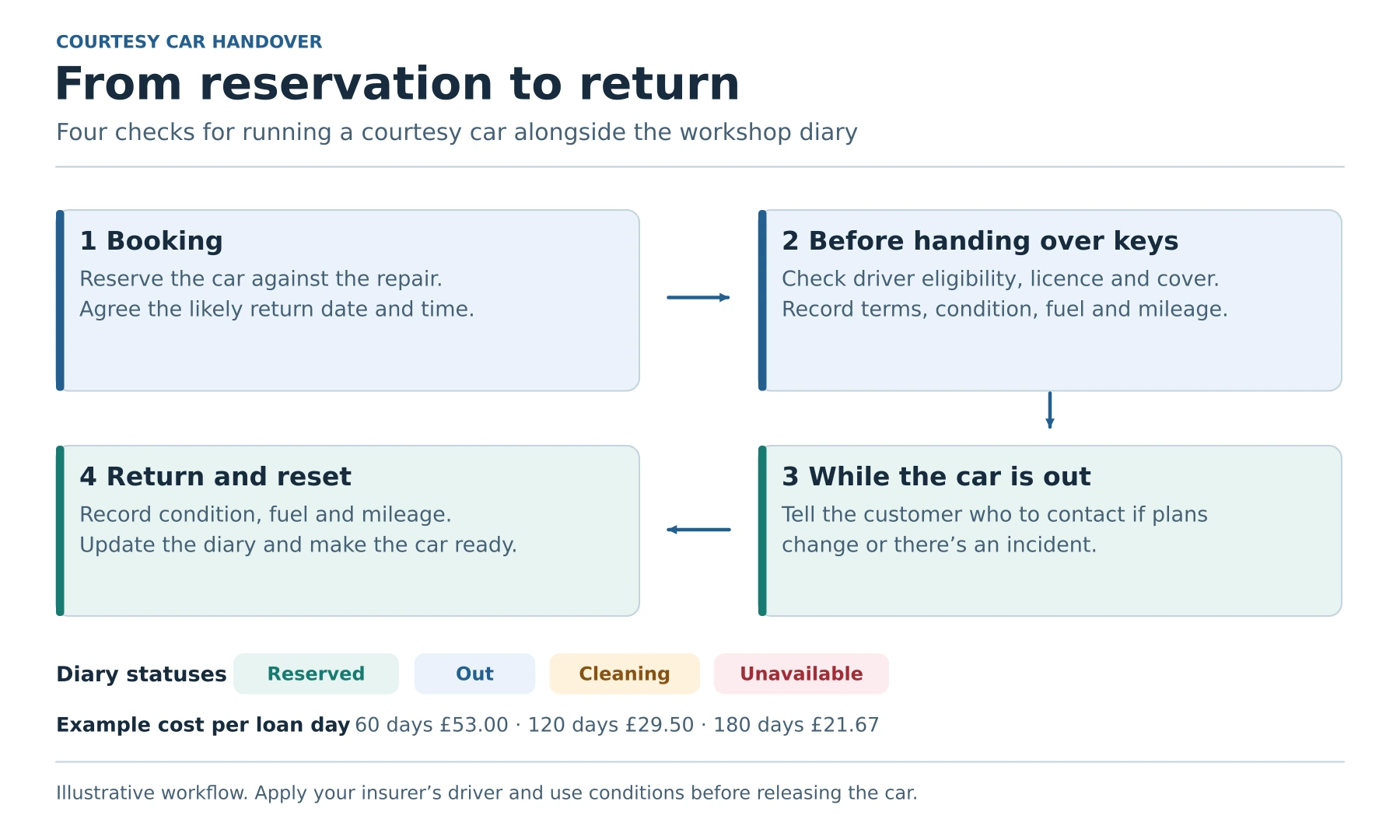
At booking, check that the car and the driver can be confirmed. Keep a status that tells reception whether it is reserved, out, being cleaned or unavailable. You need time to check and prepare it between loans. A customer bringing a courtesy car back at 4.30 pm can’t cover a different customer’s 4.15 pm booking.
Before handover, match the driver and vehicle to the booking. Record existing condition, fuel or battery level, mileage, who has taken the keys and the expected return. Show the customer where to find the emergency contact details. Confirm what they should do if a warning light appears or plans change. If their own repair runs late, check before extending the loan and update the next booking if it’s affected.
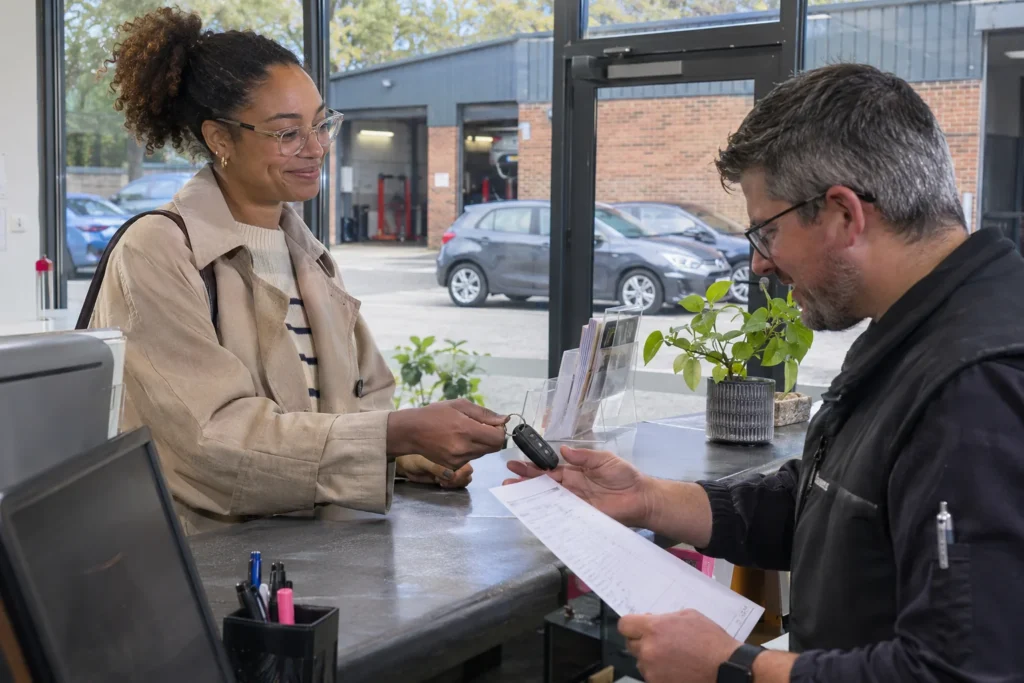
On return, record the condition, fuel and mileage using the same method. Confirm the handover, deal with anything outstanding under the agreed terms and update the diary when the vehicle is ready to go again. In Garage Invoice, the appointment shows whether a courtesy vehicle was arranged, which keeps the requirement visible alongside the repair booking.
Read more: Garage Invoice appointment details
If the enquiries are there but you’re unsure how often the car will be used, compare a local hire arrangement, a lift to a nearby station or useful while-you-wait slots for short jobs. Ask what each would cost and how often a customer would choose it. Run a trial for a quarter if you can. Check days used, turnarounds that slipped, money received and bookings won because people could get home or to work.
A courtesy car earns its place when enough customers need it and the garage can keep the arrangement predictable. Put the diary, the insurance and the monthly figures side by side. They’ll tell you whether the next set of keys belongs in your drawer or with a hire partner.
Collection and delivery can be the cheaper option. See how to offer vehicle collection and delivery.
