A customer wants a service on Thursday. They work from home, have the school run later and can’t get to your workshop before you close. Collecting the car might win you the booking. It might also take two members of staff away from the garage for the best part of an hour.
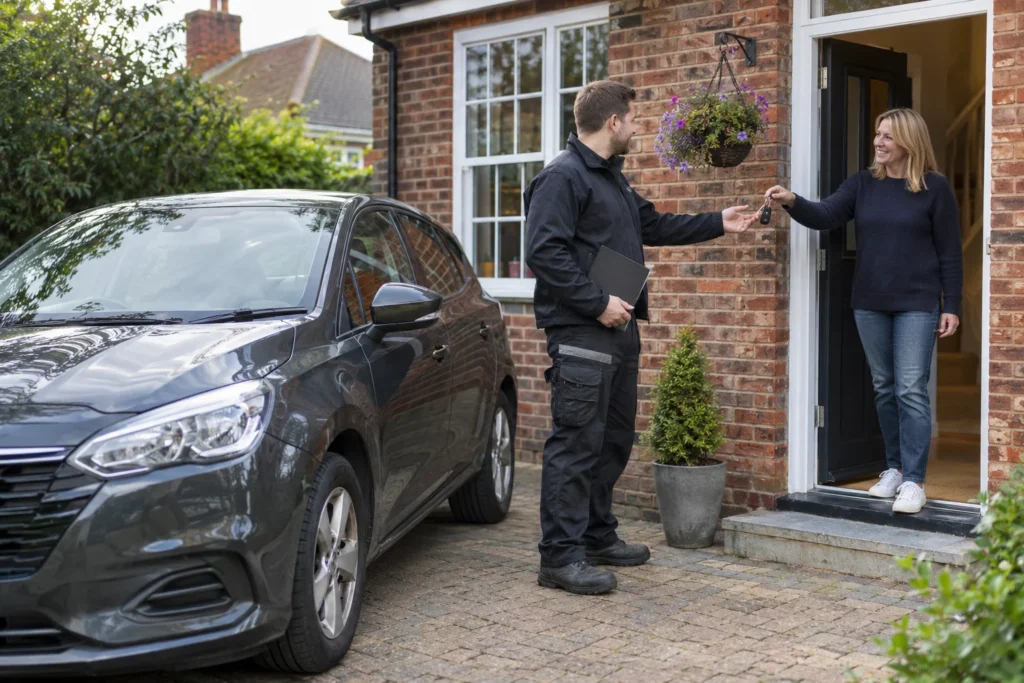
Start with a small area, a couple of collection windows and a price based on the whole journey. Here’s how to set it up so you know whose keys you’ve got, who’s driving and what the service actually earns.
Look at enquiries you’ve lost because customers can’t get to you. A planned service or service and MOT is usually easier to fit in than a car with an unknown fault. You know roughly how long the work takes and your customer can tell you where it’ll be parked. If you’re tempted to open the whole postcode area straight away, drive a couple of sample routes at the time you’d collect. Three miles across a town centre can take longer than six miles round the edge.
Two published offers show different ways to sell it. Halfords lists collection and delivery at £19.99 for servicing or servicing with an MOT through participating garages. Reliable Car Maintenance in Chessington advertises free collection and delivery with a service and £20 for MOT-only bookings. These are individual offers checked in November 2026. Each business chooses its routes, eligible jobs and what it charges.
Sources: Halfords collection service · Reliable Car Maintenance
Write a short offer your receptionist can explain without checking with the boss every time.
| What to decide | Example for a small workshop |
|---|---|
| Area | Selected postcodes within a drive we can usually make in 15 minutes |
| Jobs | Advance bookings for services and service-plus-MOT jobs |
| Collection | 8–10 am, with an update when the driver is on the way |
| Return | An afternoon window confirmed after the work is complete |
| Address | Same address both ways unless agreed before booking |
| Price | One price for collection and return within the area, shown before the customer books |
A car that may be unsafe to drive, a non-runner or a vehicle you can’t lawfully drive needs a separate plan. Give staff a clear way to stop the collection and explain the recovery options.
Explain the service to your motor-trade broker in plain terms. Give them the names or categories of drivers, the vehicles you’ll move, where you’ll collect them and whether they’ll be left at your premises overnight. Ask for written confirmation that the policy covers the proposed use, customer vehicles and relevant drivers. Check limits, exclusions and excesses. Public liability insurance won’t cover driving on the road. You need motor insurance to drive any vehicle on a UK road, so make sure your motor trade road risks cover includes your drivers in customers’ cars.
Source: GOV.UK vehicle insurance
On a routine road journey, check the driver’s licence, insurance for the journey, and vehicle tax and MOT where required. Check the vehicle is safe to drive and agree a stop rule for your drivers if it looks unsafe at pickup. Trade plates have conditions on insurance, roadworthiness, MOT status and permitted use. If you plan to use them, check the DVLA rules against the exact journeys on your application. In Great Britain, a car with an expired MOT can only be driven to a pre-arranged MOT test or to or from somewhere it’s being repaired, so check the journey fits and that your insurer covers it. In Northern Ireland, check the nidirect rules before moving the car. If the car may be unsafe, arrange suitable recovery.
Sources: GOV.UK roadworthiness guidance · DVLA trade plate rules · MOT rules in Great Britain · Northern Ireland MOT guidance
Check the route for local emissions charges before quoting. The GOV.UK Clean Air Zone checker links to separate London and Scottish schemes. Show the customer the total upfront, including unavoidable route charges you can calculate. If a mandatory charge depends on details you still need, explain how it will be worked out.
Sources: Clean Air Zone checker and links to other schemes · CMA price transparency guidance
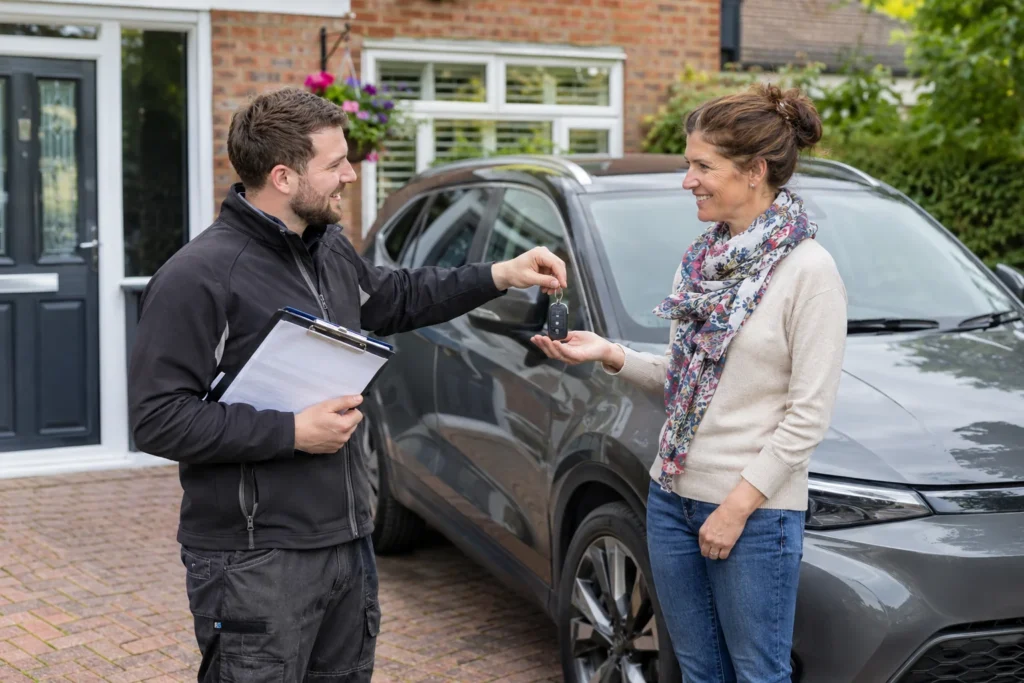
A two-person run normally uses a support car. Both colleagues travel to the customer, then one drives the customer’s car back while the other brings the support car. They then make the reverse journey for delivery. Count both people’s time and all four legs in the support car. Include any tolls or fares you expect. On a quieter day, check who can cover the phones or fit tyres while the drivers are away.
A customer lives three road miles from your garage. Across collection and return, two staff members spend 80 minutes combined, including handovers. The support car travels 12 miles. The customer’s car covers another six over the two journeys. The example uses costs before any VAT the garage can reclaim.
| Cost | Calculation | Amount |
|---|---|---|
| Staff time | 80 minutes at £21 per staff-hour | £28.00 |
| Support car | 12 miles at an assumed £0.35 per mile | £4.20 |
| Extra admin and small expenses | Allowance | £2.80 |
| Total trip cost | £35.00 |
At £24 including VAT, an illustrative standard-rated fee gives a VAT-registered garage £20 before VAT. That leaves £15 to cover from the work on the car. A charge of £42 including VAT would cover the £35 trip cost in this example. If work is billed differently in your business, check the VAT treatment with your accountant and work on a consistent tax basis.
Source: HMRC VAT rates
Free or subsidised collection can still make sense. Say six customers use it in a week, each paying £20 before VAT. Their trips cost £210 and the fees bring in £120, so the workshop covers £90. If two of those six customers only booked because of collection and each job contributes £100 after direct repair costs, the week comes out £110 ahead on these assumptions. If every customer would have booked anyway, the service costs £90 before allowing for any other benefits. That one question makes a big difference when you review the trial.
A wider radius can also be more expensive even if the fuel barely changes. If a technician leaves a bay, note any billable work you had to turn away or move. For busy times, compare using a suitable dedicated driver, clustering two addresses in one trip, or reducing the number of collection slots. Check how each arrangement changes the insurance and the customer promise.
Base the driver's time on what your hours really cost. The free labour rate calculator works it out from your wages, overheads and billable hours.
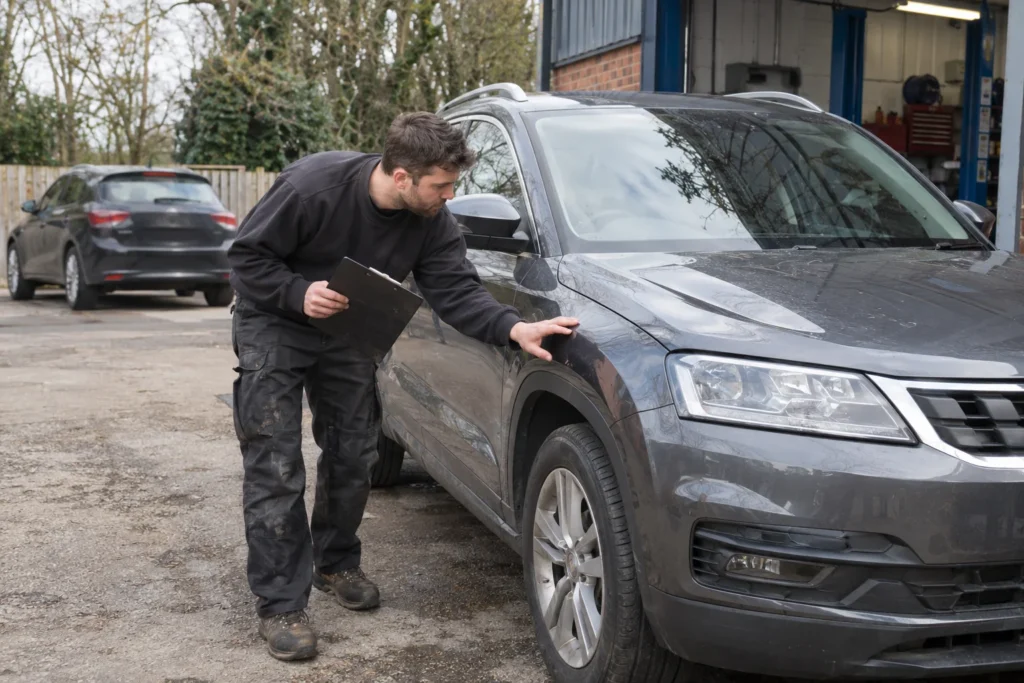
Before leaving the garage. Confirm the address, registration, contact number, time window, keys and any access instructions. Ask who can hand over the car and whether it has a warning light, damage or a fault that may affect driving. Tell the customer how to recognise the driver.
At collection. Record the time, mileage, fuel or charge level and any visible damage. Take proportionate condition photos where useful under your usual privacy and retention procedures. Check the keys and any locking wheel nut key the workshop needs. If the customer has something valuable inside, ask them to take it out. Keep the photos with the booking and limit who can see them.
Source: ICO guide to keeping personal data secure
At the garage. Give the keys a labelled place, log who has the car and keep the booking tied to the job card. If extra work changes the price or return time, contact the customer and get approval for the work before going ahead. A customer expecting their car for the school run needs that call before the return slot slips.
Source: The Motor Ombudsman service and repair code
At return. Confirm the return window, recipient and payment arrangement before setting off. Record who received the keys and when. Send the invoice and any agreed findings through your usual channel. Have a plan for failed handovers so staff know whether to return to the workshop or make another agreed attempt.
Open one collection window and one return window on two quieter days. Track the number of enquiries, accepted bookings, jobs you think the service helped win, total staff minutes, mileage and any work moved off the ramp to make room. Ask each customer what they would have done without the service. Their answers will give you a better sense of whether you’re winning work or adding convenience to bookings you already had.
After a month, keep the routes and jobs that earn their space. If every pickup on the other side of town runs late, bring the boundary in. If two businesses in the same estate want their vans serviced on the same day, test one planned run. You can use the collection service field in Garage Invoice to keep that arrangement visible on the appointment.
Read more: Garage Invoice appointment details
