A one-bay garage can look affordable when you’re standing in an empty unit with a tape measure. Then you start adding the lift, the electrician, tool storage, the lease deposit and the first parts bill. The doors still haven’t opened and most of the money has a job already.

In the worked example below, an owner-operated garage needs £21,500 to get set up and £16,500 for a three-month cash buffer, giving a starting cash target of £38,000. That’s a planning example for a small general repair workshop in rented premises, with no employees or MOT bay. Your own figure depends on what you already own, the unit you take and how soon customers start paying.
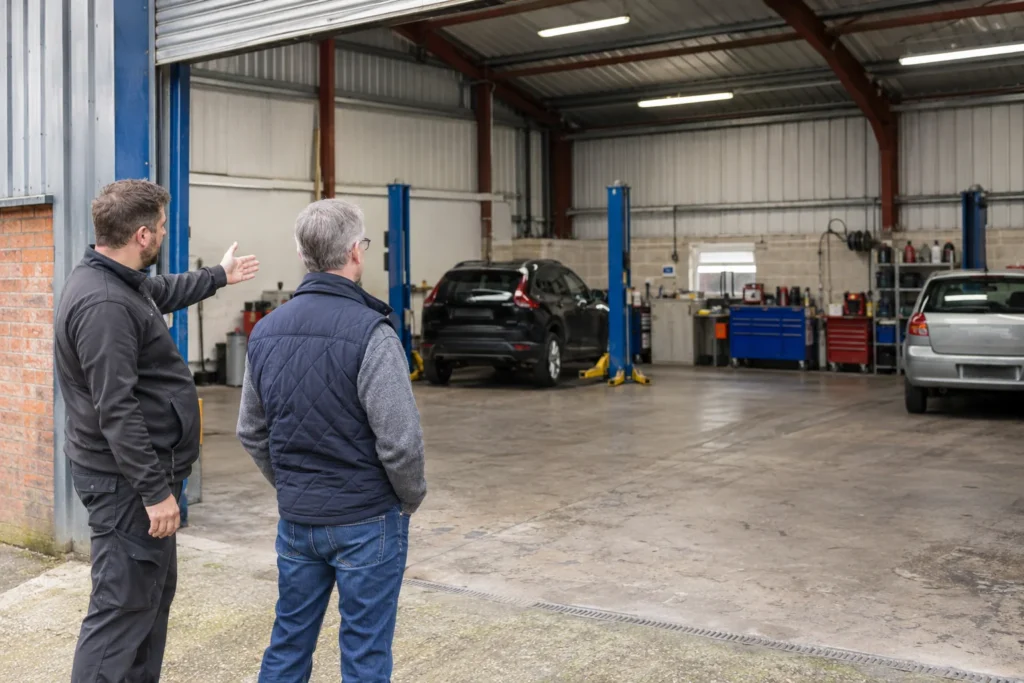
Two prices checked in November 2026 help put the numbers in context. A Rightmove listing for two fitted repair workshops on Stallington Road in Stoke-on-Trent asked £1,500 a month, or £18,000 a year. Automotech listed one 4-tonne two-post lift at £1,650 plus VAT, before delivery and installation. The rent refers to one specific property and the lift figure is a supplier product listing. Ask for a written breakdown of what the lease includes and whether the supplier’s quote covers VAT, delivery and installation.
Sources: Rightmove’s Stoke-on-Trent workshop listing · Automotech’s AS-6140D listing
Walk a potential unit with a lift installer before agreeing the lease. Ask what they need to confirm about the slab, fixings, headroom and electrical supply. Give them the types of vehicles you want to lift, including heavier vans if you’ll take them. Get a price for delivery, installation and commissioning. Understand what ongoing checks, maintenance and thorough examinations will cost. An apparently cheap unit can need expensive work before you can lift your first car.
Source: HSE guidance on working under vehicles and vehicle lifts
Find out whether the planned use is allowed by the lease and the local planning authority. Ask who covers the roof, shutters, yard and service charges. Check your parking rights and what it costs to return the unit in the condition the lease requires. This planning guidance applies to England, and the local authority can direct you to the relevant system elsewhere.
Sources: GOV.UK guide to commercial tenant responsibilities · Planning Portal guidance for England
Assume the owner already has some personal hand tools, plans to service and repair cars and light vans, and pays their first month's rent from the operating cash buffer. The figures are estimates for this example. They use a consistent VAT-exclusive basis. The cash needed at the bank may be higher if you pay VAT before you can reclaim it, or if you aren’t VAT-registered and can’t reclaim it at all.
| Cash needed before opening | Example |
|---|---|
| Lease deposit, three months at £1,500 | £4,500 |
| Lease review, survey and checks | £1,800 |
| Lift delivered, installed and commissioned | £3,500 |
| Additional tools, diagnostics and workshop equipment | £6,000 |
| Electrical work, lighting, security and signage | £3,000 |
| Opening stock, fluids and consumables | £1,600 |
| Initial setup costs, including booking and payment setup | £1,100 |
| Cash to get set up | £21,500 |
The lease deposit ties up cash even if it will come back at the end. Ask what’s payable on signing and what’s due before the keys are handed over. Some landlords want rent quarterly in advance. Use the actual dates on the lease to plan your bank balance.
Make a list of the first jobs you’ll take, then price the tools needed to finish them. A service, a battery fault and a brake repair call for different equipment. Budget for the scanner and its renewal, a battery support unit if you need one, and calibration where required. Delay buying specialist kit until you can put a credible number on the jobs it would earn. Ask nearby suppliers how often they deliver and what happens when you return a wrongly ordered part. That tells you how much cash to tie up in stock.

| Monthly cash costs | Example |
|---|---|
| Rent | £1,500 |
| Rates and service-charge allowance | £250 |
| Power, heat and water | £350 |
| Motor trade insurance allowance | £220 |
| Software and phone | £100 |
| Waste collections | £120 |
| Equipment upkeep and training allowance | £260 |
| Marketing and other overheads | £200 |
| Workshop bills | £3,000 |
| Owner’s living allowance before personal tax | £2,500 |
| Total monthly cash target | £5,500 |
Three months at £5,500 gives you £16,500 before assuming any contribution from repairs. Add the setup costs and the total comes to £38,000. If you expect trade customers to pay after you’ve paid the parts factor, add the likely cash gap. If you finance the lift, put the actual upfront payment in the setup budget and each repayment on its due date. Allow separately for tax and any upcoming VAT payments.
Still choosing premises? Read does location matter when opening a garage? or compare mobile mechanic vs workshop.
An MOT bay needs a separate investment decision. In Great Britain, DVSA has requirements for the premises, equipment and authorisation. If you’re opening with general repairs, budget using the work you can sell from day one and price an MOT bay separately after checking the requirements.
Use money left after parts costs and other direct job costs to pay the standing bills. Here’s how that can work in the example. Assume £78 in labour income per billed hour and £800 per month from parts after paying the supplier and other direct job costs. That leaves £4,700 of the monthly cash target for labour to cover. Divide by £78 and round up to 61 billed hours per month. Replace the assumed parts profit with what you can defend based on the work you expect to do.
| Example month | Labour billed | Parts contribution after direct costs | Left after £5,500 of bills and owner’s allowance |
|---|---|---|---|
| Quiet month | 46 hours at £78 = £3,588 | £500 | −£1,412 |
| Steadier month | 69 hours at £78 = £5,382 | £800 | £682 |
The quiet month is the one to put in the bank forecast. You can spend forty hours a week at the garage and bill for far fewer while setting up suppliers, quoting work, unpacking stock and waiting for parts. Run the same figures for three quiet months and decide what you’d cut, defer or pay for differently if bookings build slowly.
Before you commit, get the landlord’s figures, an installed lift quote and an insurance quote in writing. If a fitted workshop costs more per month, find out which equipment you can use, who owns it and when it was last examined. Compare the higher rent across the whole lease with the cost of fitting out an empty unit. Put every payment into the month it leaves your account. Finally ask what work could realistically be in the diary when you open. A well-equipped ramp is valuable when you have cars to put on it and enough cash to keep the place running between jobs.
Read more: Garage Invoice’s free garage invoice template for Excel, Word and PDF
