Yes. A garage’s location affects who can reach you, what the premises cost and how many cars you can work on in a day. A main-road unit can earn its higher rent if it brings in enough extra work. A cheaper unit tucked away on an industrial estate can be the better deal if customers can find it, drop off easily and you have room to work.
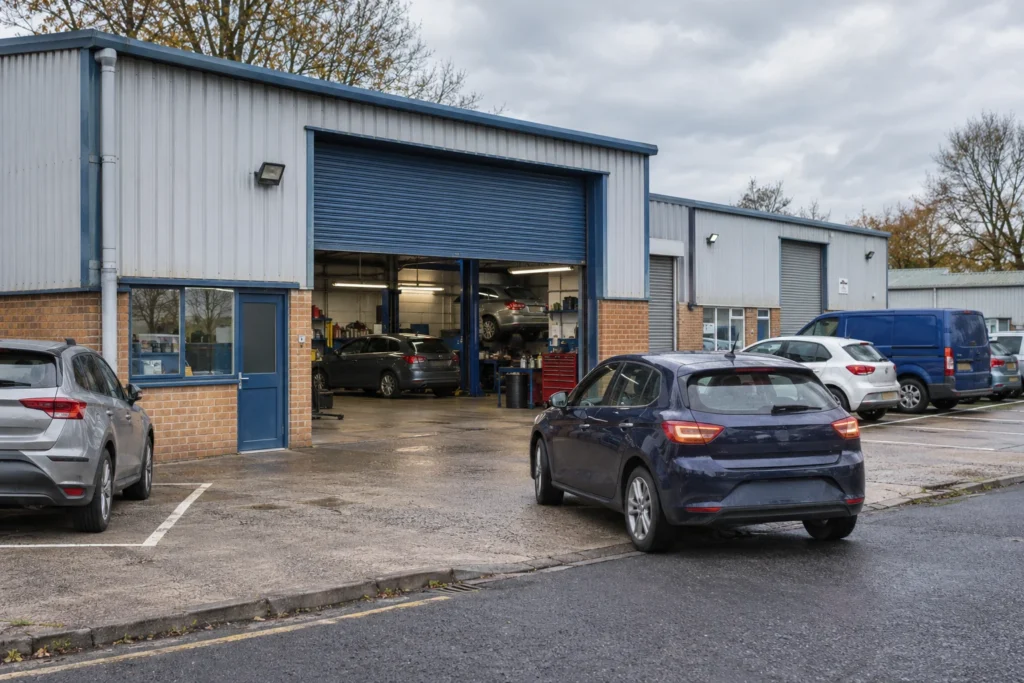
There’s a quick way to start comparing. Work out how many extra jobs the dearer site would need each month, then visit both sites and see which one could actually handle them.
The UK had 42.9 million licensed vehicles at the end of June 2026, according to the Department for Transport. The local picture can look very different. Census 2021 found that 42.1% of London households had no car or van available, compared with 23.3% across England and Wales. Those figures are from different dates and measure different things. For choosing premises, the useful step is to look at the local data around each address.
Sources: DfT vehicle licensing statistics · ONS Census 2021 car and van availability
Pick the work you want most. For servicing, brakes and general repairs, look at where people live and work within a realistic drive. For van fleets, map depots and trade estates and speak to the people who organise their servicing. For a specialist garage, look further afield and find out whether drivers already travel for the work you do.
Look at what a particular gap would mean for your diary. If local garages seem busy but all the enquiries you get are for work you can’t do, the area may be busy for someone else. A few conversations about which vans a fleet runs, how often they need servicing and when they can release them can be more useful than counting every vehicle on the road.
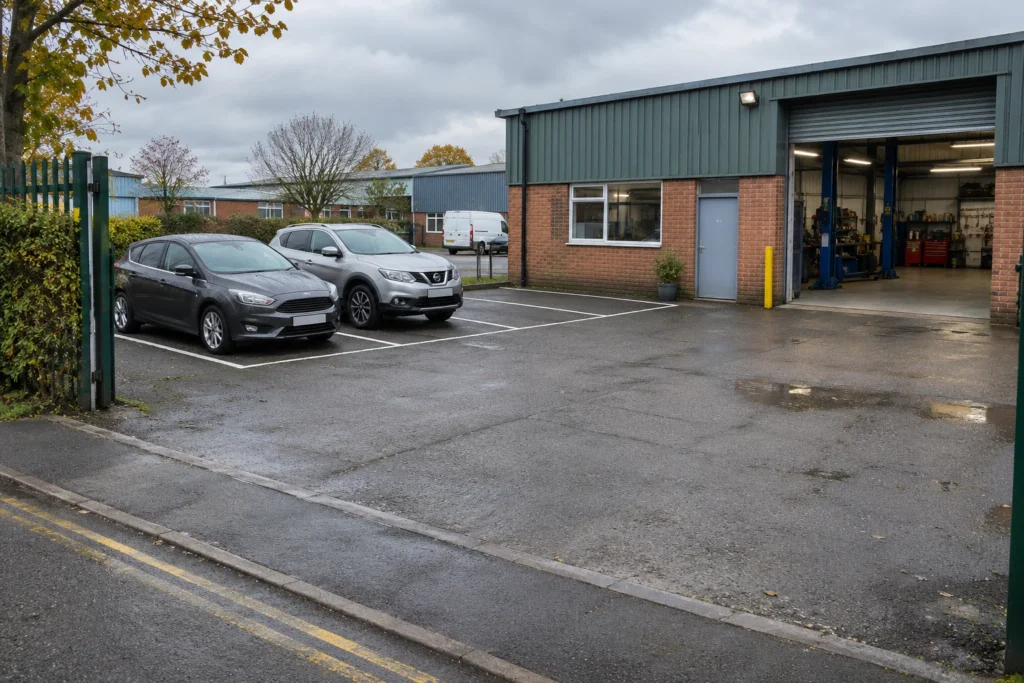
Drive the last mile from both directions. Can you turn in during rush hour? Is there room for a recovery truck to get in and unload? Can a customer leave the car and walk to a bus stop or get picked up without standing in the middle of the yard?
Then work through a busy morning. Imagine two cars on ramps, a van waiting for a part, a car ready for collection and three customers turning up together. Sketch where each vehicle goes. Check which spaces are yours under the lease and what you’re allowed to leave overnight. A yard that looks generous on the viewing may serve several neighbouring units.
Visibility can help if the sign is readable at the right point in the journey and customers can turn in easily. On an industrial estate, map directions, a clear booking confirmation and a sign at the right junction can do a lot of that work. Find out what signage is allowed before putting a premium on frontage. If you serve fleets or offer collection and delivery, check whether any of those routes cross an emissions zone and how that affects the vehicles you’ll use.
Source: GOV.UK Clean Air Zones guidance
Explain exactly what you plan to do. Mechanical repair, MOT testing, bodywork, paint spraying and outdoor vehicle storage can raise different questions. Ask the local planning authority about the current lawful use and any conditions on hours, noise or outside space. Check separately that the proposed lease allows your activities. Planning Portal’s change-of-use guidance applies to England. For a property elsewhere in the UK, speak to the relevant local planning authority.
Source: Planning Portal change-of-use guidance
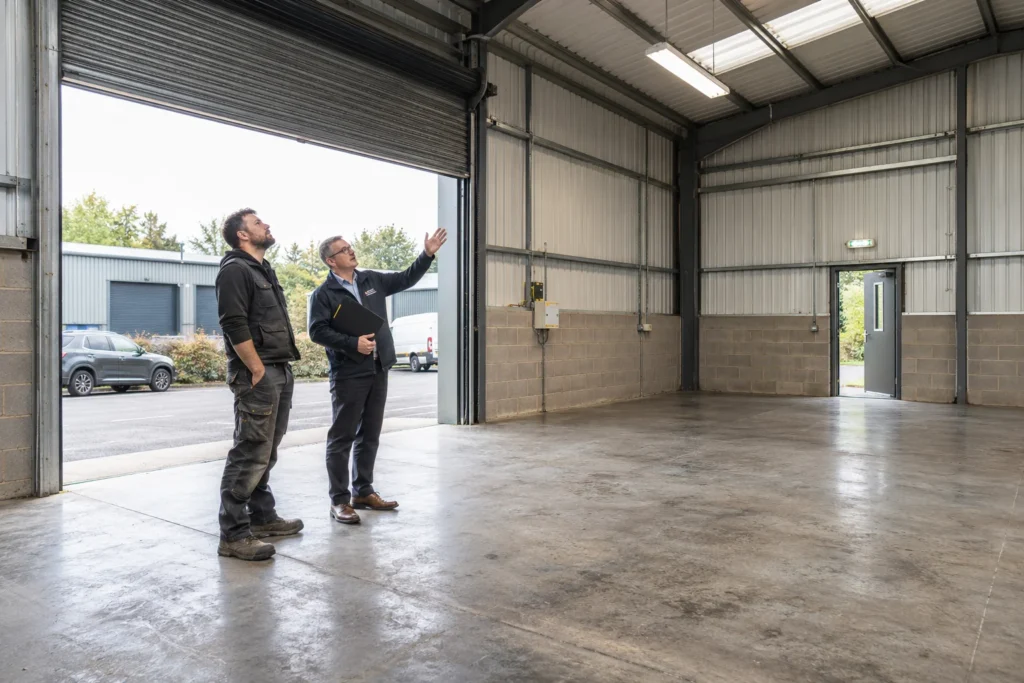
Measure the shutter, ceiling and usable bay width against the largest vehicles you plan to take. Have a lift supplier check the floor and fixings against the lift manufacturer’s specification. Get prices for any power upgrade, ventilation and drainage work. Check where the drains lead if you’ll wash vehicles or produce contaminated water, and find out what permissions apply before using them.
Sources: HSE guidance on workshop lifts · Environment Agency pollution prevention guidance for England
The rateable value is used to calculate the bill. Ask for the address-specific valuation and check what relief your business could receive. The valuation search covers England and Wales, while the GOV.UK overview links to the separate Scottish and Northern Irish systems. In England, eligible businesses that only use one property pay no rates if its rateable value is £12,000 or less. Check your own eligibility before budgeting for a zero bill.
Sources: Business rates overview · England and Wales valuation search · England small business rate relief
If you want to carry out MOT testing in Great Britain, check DVSA’s requirements for the station, equipment and authorisation before relying on MOT revenue. Northern Ireland has a separate DVA test-centre system. If a site is close to a watercourse or the yard sits lower than the road, look up long-term flood risk and check the terms your insurer would offer. You may have customers’ cars on site overnight as well as your equipment.
Sources: DVSA MOT station guidance · Northern Ireland test centres · UK flood risk guidance and local maps
Visit each shortlisted site during the hours you’ll actually trade. Bring a tape measure, a rough parking plan and last month’s diary if you already have one. Leave with the answers to four questions.
You might find you’d rather pay for a wider yard and a second usable ramp than for the busiest address in town. Or the main-road unit might make sense if it gives you drop-off space and access to a steady stream of the jobs you want. Choose the site where you can see those jobs moving from the booking diary to the ramp and out the door.
Once you have your bays and opening hours worked out, Garage Invoice can help you manage workshop bookings, job cards and invoices. See it with example data in the live demo.
