You can get a lot of work done from a van. You can also spend half of Tuesday driving around for a sensor that looked right in the catalogue. A good mobile mechanic business is built around jobs you can finish on site, a patch you can cover without losing hours to traffic, and prices that pay for the whole visit.
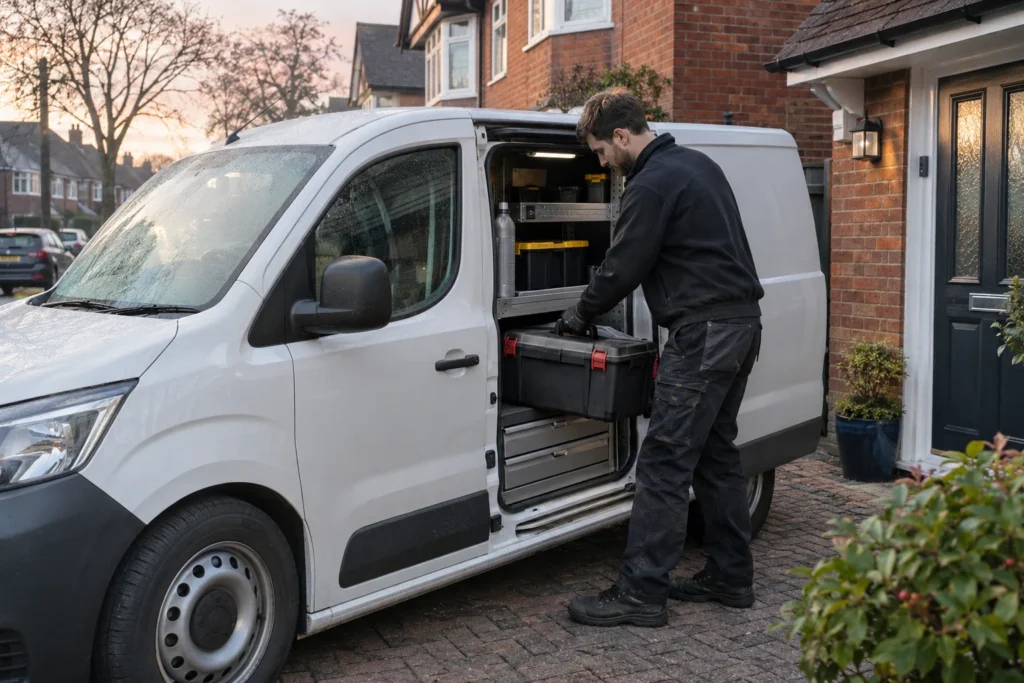
The UK had 42.3 million licensed vehicles at the end of 2025, and the average licensed car was 10 years old, according to the Department for Transport. To see what’s on the road near you, look up local car and van counts in DfT’s VEH0105 table. Then talk to local parts factors, garages and small fleets. Vehicle counts tell you where to look. Enquiries and repeat bookings tell you which jobs people will pay you to do.
Sources: DfT vehicle licensing statistics · DfT local vehicle data tables
Start with two or three neighbouring postcode districts and plan routes around the times you’ll actually drive. A six-mile trip that looks easy on a Sunday can take half an hour on a school morning. Give one area the morning and another the afternoon if that keeps you out of the same traffic twice. Leave room for the job that runs over.
Routine servicing, batteries, selected repairs and fault finding are sensible starting points if you’re trained, equipped and insured for them. Start with jobs you know how to quote and can usually finish in one visit. The AA’s mobile service, for instance, asks for an accessible, off-street location with room to work. A small independent garage can be a good contact for work that needs a ramp, more space or a car kept overnight.
Source: AA mobile mechanic FAQs
Before you accept a booking, get the registration, make and model, the symptoms, the address and a description of the parking. Ask for a photo if the site or access is unclear. Check parts availability and any differences between versions of the same car. Tell the customer what you can do on the first visit. For a fault you haven’t seen yet, quote for diagnosis and explain how you’ll price the repair after you’ve found the cause.
Choose how you’ll trade. If you work as a sole trader, HMRC generally requires you to register for Self Assessment once your gross trading income goes over £1,000 in a tax year. A limited company has its own registration, accounts and tax obligations. Keep records of sales, bills, mileage and customer payments from day one, whichever structure you choose.
Sources: GOV.UK sole trader guidance · GOV.UK guide to setting up a limited company
Check VAT on sales. The usual UK threshold is £90,000 of taxable turnover. Registration is required if you go over it in the previous 12 months or expect to exceed it in the next 30 days. The calculation includes the value of taxable parts and labour sold, including the part of the parts bill that goes straight back to the supplier. Check where you stand regularly and think through what registration would mean for the prices private customers see.
Source: HMRC VAT registration guidance
Tell your insurer how you work. Ask for cover that reflects the van’s business use and the places you’ll work. Tell the broker if you’ll road-test or move customer cars and ask for written confirmation of who and what is insured. Ask about public liability, accidental damage to vehicles in your care, and tools kept in the van, including overnight. Check policy limits and exclusions. If you hire someone, check employers’ liability requirements before they start.
Sources: GOV.UK vehicle insurance · GOV.UK employers’ liability insurance · Example of motor-trade cover options
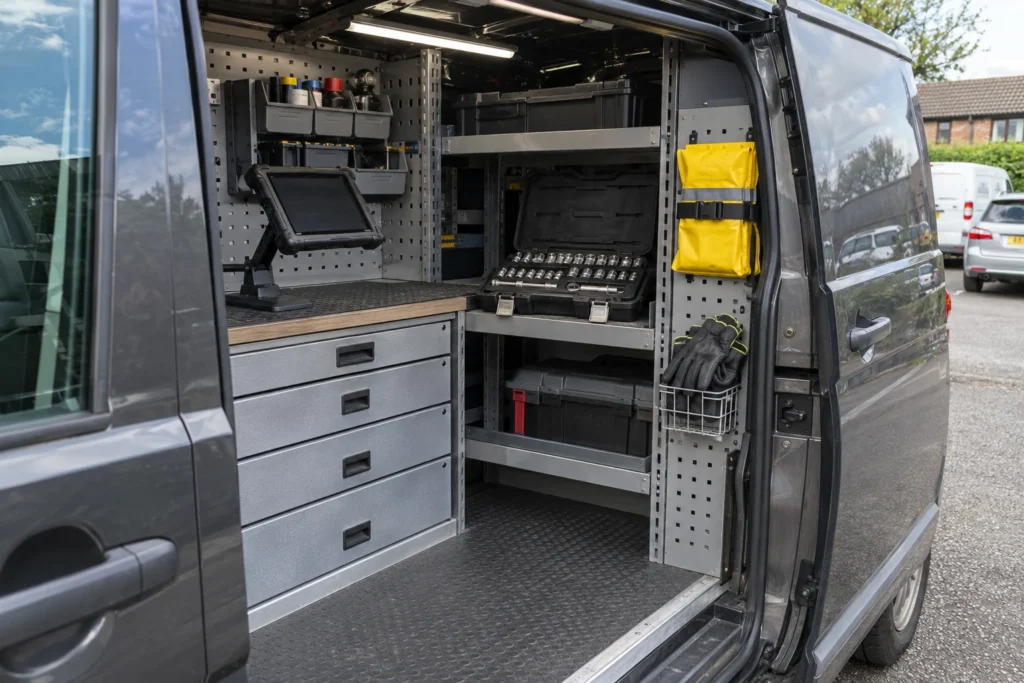
Choose the van after deciding which jobs you’ll take. Check its payload once you count the racking, tools, fluids, spare parts and everything else you’ll carry. Keep the tools you use most within reach and leave room to secure waste containers and carry parts without them shifting. Price tyres, servicing and breakdown cover along with the monthly payment. If your patch includes a clean air or low emission zone, check the actual vehicle against the local rules before you buy.
Source: GOV.UK clean air zone checker and links to separate schemes
In November 2026, Citroën UK advertised Berlingo business contract hire from £319 per month excluding VAT, plus an initial rental. That’s one supplier’s advertised deal. Compare the full cost over the term, including the initial rental, mileage limit and any charges for returning the vehicle. Then price a used van with cash set aside for repairs and downtime.
Source: Citroën UK business van offers
Fuel is easier to estimate if you plot a week of routes. The UK average diesel pump price was 198.19p per litre in the week starting 9 November 2026. At that price, 250 miles in a van doing 35 imperial mpg would cost about £64 in fuel. Use your own fuel receipts and mileage after the first few weeks.
Source: UK government weekly road fuel price data
Buy the equipment your opening job list actually needs. That might include hand tools, suitable lifting and support equipment, a diagnostic subscription, lighting, PPE, a spill kit and secure waste containers. Price specialist equipment against jobs you can realistically book. If you want to work on electric or hybrid vehicles, match your training and equipment to the tasks you’ll carry out. You need an appropriate qualification to recover F-gas refrigerant from relevant vehicle air-conditioning systems.
Sources: HSE electric and hybrid vehicle guidance · GOV.UK vehicle air-conditioning qualification guidance
Book routine work on a suitable off-road site with the owner’s or site manager’s permission. Check for space around the car and look out for slopes, soft ground, passing traffic and other people using the area. HSE advises using firm, level ground before lifting a vehicle away from a workshop. If the site is unsuitable, arrange for the vehicle to be moved somewhere safe or refer it to a workshop.
Source: HSE guidance on working under vehicles
England and Wales restrict commercial vehicle repairs and servicing on a road. There is a limited defence for necessary accident or breakdown repairs, subject to timing and other conditions. Northern Ireland has its own law on road repairs. If you intend to offer roadside work, check local rules for your area and agree the scope with your insurer.
Sources: England and Wales legislation · Northern Ireland legislative notes
Plan where you’ll take used oil, filters, batteries and other waste before your first service. Ask a registered waste contractor how it accepts, documents and charges for each type. If you carry business waste in the van, check which registration you need with your nation’s regulator. Keep the required paperwork and separate hazardous waste as directed.
Source: GOV.UK business waste guidance and links to each UK nation
Here’s an example for one mechanic. The week includes 20 hours you can invoice, with the rest of your time going on driving, buying parts, writing quotes and keeping the diary moving. The figures are illustrative and exclude VAT.
| One week on the road | Amount |
|---|---|
| 20 billed hours at £70 | £1,400 |
| Five separate attendance fees at £15 | £75 |
| Parts sold | £550 |
| Less the cost of those parts | −£400 |
| Less running costs | −£420 |
| Left for the owner and tax | £1,205 |
The £420 could include £100 towards the van, £65 in fuel, £55 for insurance, £70 for tools and software, £35 for waste and consumables, £55 towards repairs and £40 for marketing. Build your own figures using real quotes. Start-up costs such as racking and an initial rental need a separate cash budget unless you’ve already included them in your weekly allowance.
If you need £800 a week before personal tax for your own time, the example leaves £405 above that target. A quieter week with 14 invoiced hours, four attendance fees and £100 in parts gross profit leaves £720 after the same £420 running costs. That’s £80 short of your target. Two weeks with the same total time at work can pay very differently.
The example also shows how quickly VAT can come into view. The first week brings in £2,025 in sales, including the full parts bill. Repeating it for 46 weeks would produce £93,150 in sales, assuming all are taxable. Allow for holidays, quieter weeks and the time it can take for fleet invoices to be paid. Use your actual rolling sales when checking registration.
Source: HMRC guidance on calculating taxable turnover
Weighing up a van against a unit? Read mobile mechanic vs workshop: which is more profitable? for a side-by-side week.
Offer a clear first-visit price and tell customers what it covers. If you include travel in that price, count it once in your figures. If a customer books regular fleet work at one site, price it based on the time across all the vehicles and check how much of the route it saves. Keep track of jobs that take two trips and check whether the price covers the extra time.
Put the agreed scope and price in writing and ask for approval before doing chargeable extra work. Agreements made online, by phone or at a customer’s home can bring cancellation and information rules into play. Read the guidance on providing written terms and getting a customer’s express request if they want applicable work to start within the cancellation period. The urgent repair exception is limited to the requested urgent job and goods needed for it.
Sources: Trading Standards guidance on off-premises contracts · GOV.UK distance selling guidance
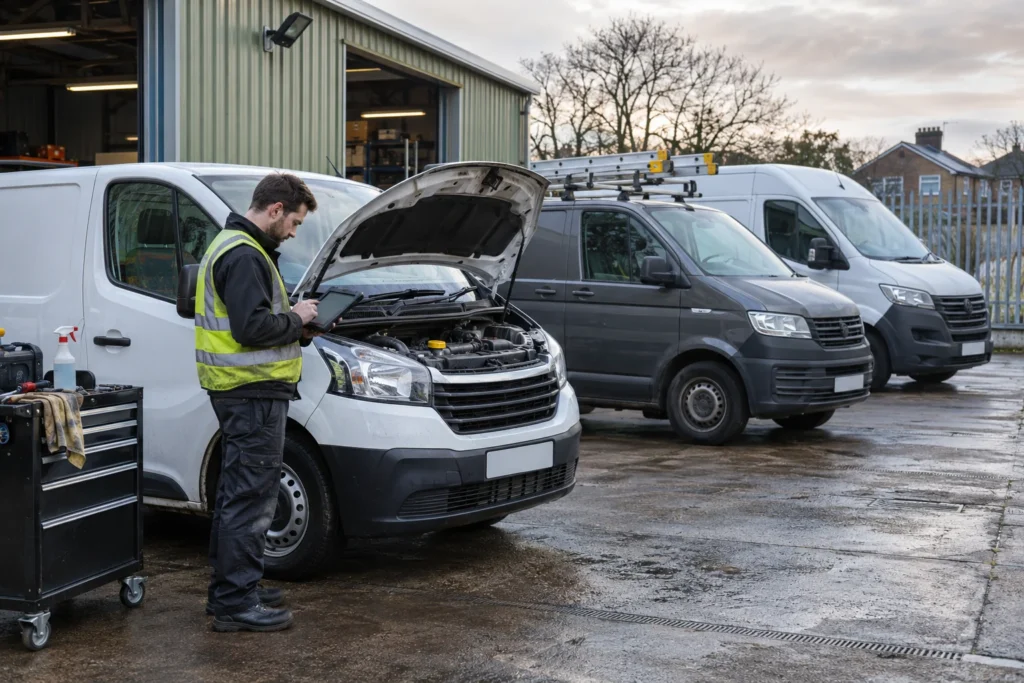
Create a Google Business Profile as a service-area business if you travel to customers and don’t serve them at your address. Google’s guidance says to remove the business address from your profile in that case. Set the service area you can reliably cover and list the jobs people can book. Ask for a review after an actual visit. A useful review often says what you did and how the appointment went.
Source: Google’s service-area business guidance
Talk to local garages about referrals for the jobs you can complete on site. Approach a few local trades or small fleet operators and offer planned visits for vehicles they can make available together. Be clear about who authorises the work and when payment is due. One regular customer with three vans at the same address can make a morning easier to plan than three jobs in different towns.
| Week | What to do |
|---|---|
| 1 | Decide which jobs you’ll take, confirm insurance and waste arrangements, and map a small service area. |
| 2 | Set your first-visit price, check suppliers and publish your booking details. Talk to a few garages about referrals in both directions. |
| 3 | Cluster the first jobs and log drive time, parts runs and time actually invoiced. Try a planned visit to a nearby fleet if the work suits you. |
| 4 | Review which jobs paid for the time they took. Change the visit price, booking questions or service area where the numbers show a problem. |
At the end of your first month, check where bookings came from, how many hours you invoiced, how far you drove and what you earned after parts and visit costs. Pick out the work that led to return visits or squeezed the next job. You might find that moving one postcode to another day does more for your week than buying a better diagnostic tool.
For a straightforward way to record parts, labour and attendance on the same invoice, use the free garage invoice template online or for Excel, Word and PDF.
