It’s eight o’clock and a customer is explaining a knock that only happens on right turns. Behind them are five people holding keys. One has to be at work in ten minutes. The first phone call of the day is ringing out. A second person on the counter would help, but you might get more from changing when people arrive.
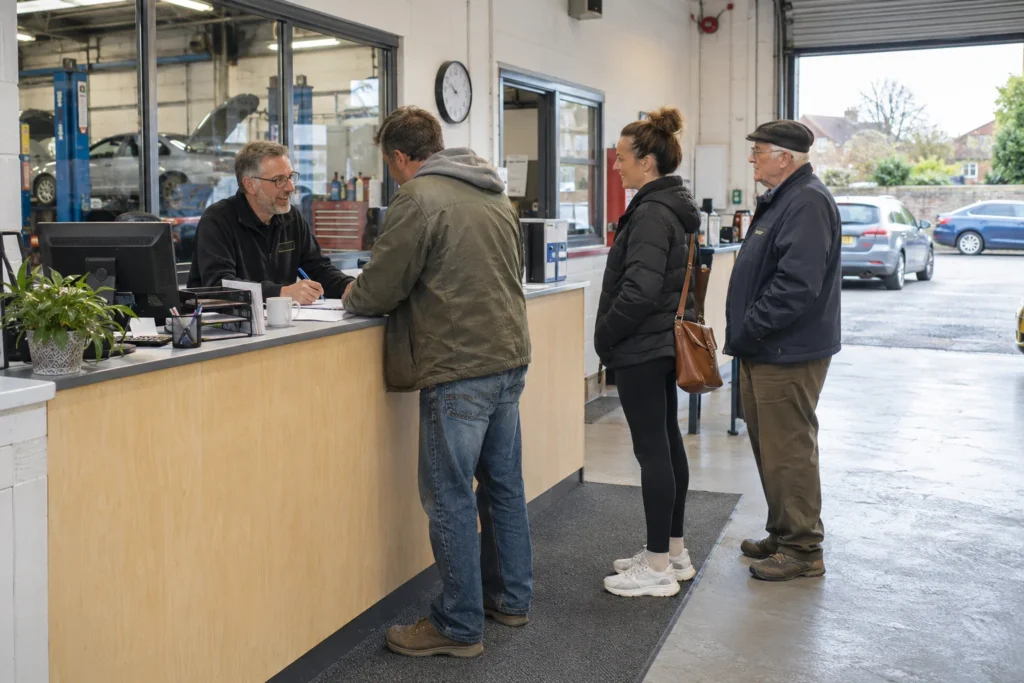
Start by giving customers a realistic time to drop off their keys. Get the routine details before they get to the desk, give awkward jobs enough time, and keep somebody available to help customers who need it. You can test all of this with the diary you already have.
In March 2026, OnePoll questioned 1,000 UK drivers who used main franchised dealers for servicing and repairs in a survey commissioned by digital check-in supplier Tjekvik. 46% said they queued to see an adviser during drop-off or collection at least sometimes. That includes 29% who said sometimes, 13% most times, and 4% every time. The survey covered franchised dealer customers. At an independent garage, use your own arrival records to find out how often the queue happens and what holds it up.
Source: Tjekvik’s 2026 aftersales survey
For five normal mornings, record when each person arrives, when someone first helps them and when their check-in is complete. The gap between arrival and attention is waiting time. The gap between attention and finish is time at the desk. Split the two and write down what else occupied the adviser. A ten-minute wait might come from three cars arriving together, a misplaced key tag or somebody answering the phone halfway through an intake.
Use three rough categories. A routine drop-off is a known vehicle and agreed job. A fault booking needs questions. A handover with a courtesy car or another arrangement has extra steps. Measure actual times for each group. It’s hard to improve a queue if every appointment is treated as if it takes the same five minutes.
An appointment confirmation can tell a customer what time to arrive without promising when the vehicle goes on the lift. Keep arrival, work start and next update clear. If a fixed-time MOT depends on an early drop-off, protect that arrival time. Offer later windows for jobs that can start later and leave a small allowance for delays.
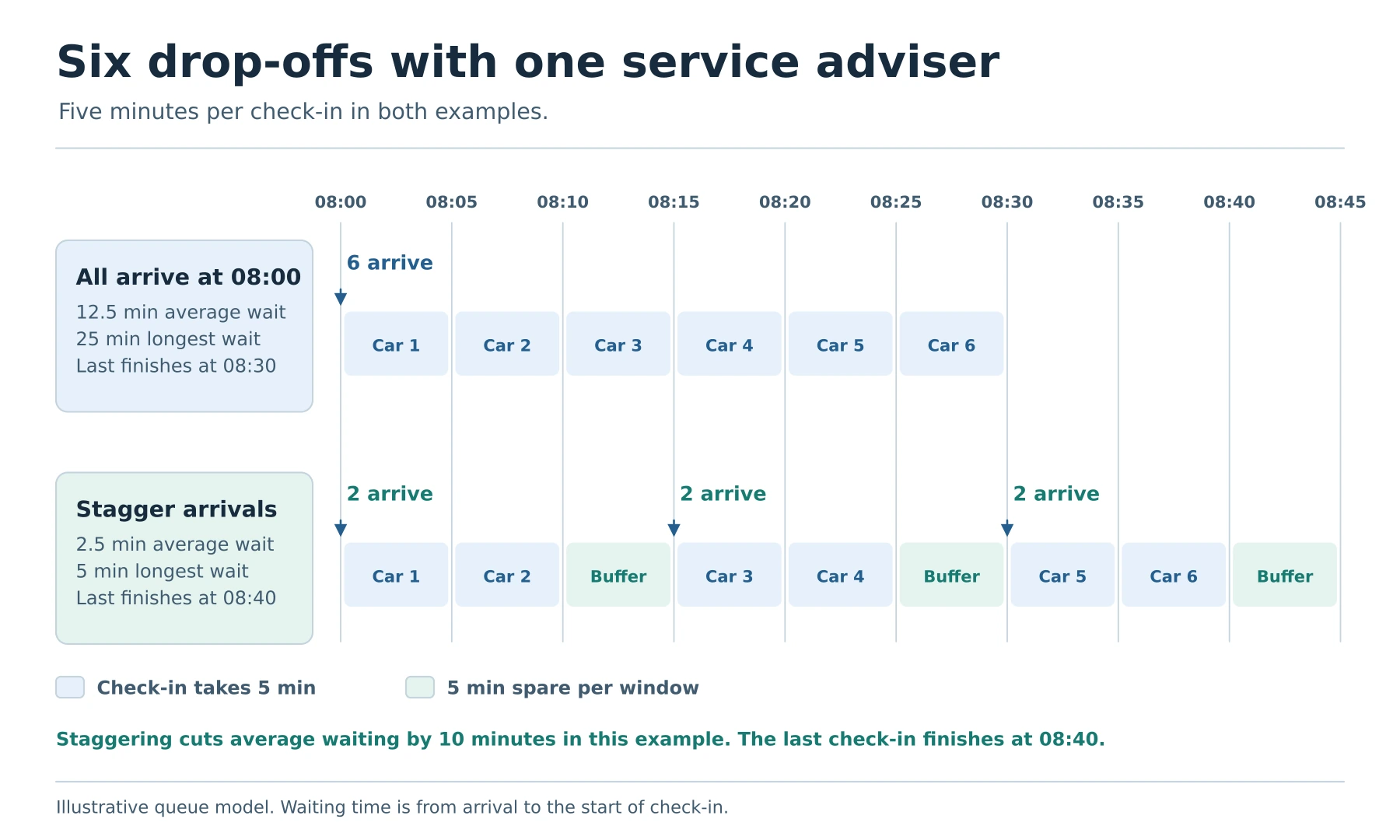
This is an illustrative example. Each routine check-in takes five minutes, everybody arrives at the agreed time and the adviser works through one person at a time. The garage has room to accept later drop-offs without delaying work due to start.
| Schedule | Waits measured from arrival | Average wait | Longest wait | Last customer checked in |
|---|---|---|---|---|
| All six arrive at 8 am | 0, 5, 10, 15, 20 and 25 minutes | 12.5 min | 25 min | 8.30 am |
| Two arrive at 8 am, two at 8.15 am and two at 8.30 am | 0 and 5 minutes in each pair | 2.5 min | 5 min | 8.40 am |
The adviser still spends 30 minutes on check-ins. The total time customers spend waiting drops from 75 minutes to 15 minutes. The last car is checked in ten minutes later, so match the windows to the day’s first jobs. Each 15-minute window can hold two five-minute check-ins with five minutes spare. If a longer intake uses that spare time, decide what to move before the next pair turns up.
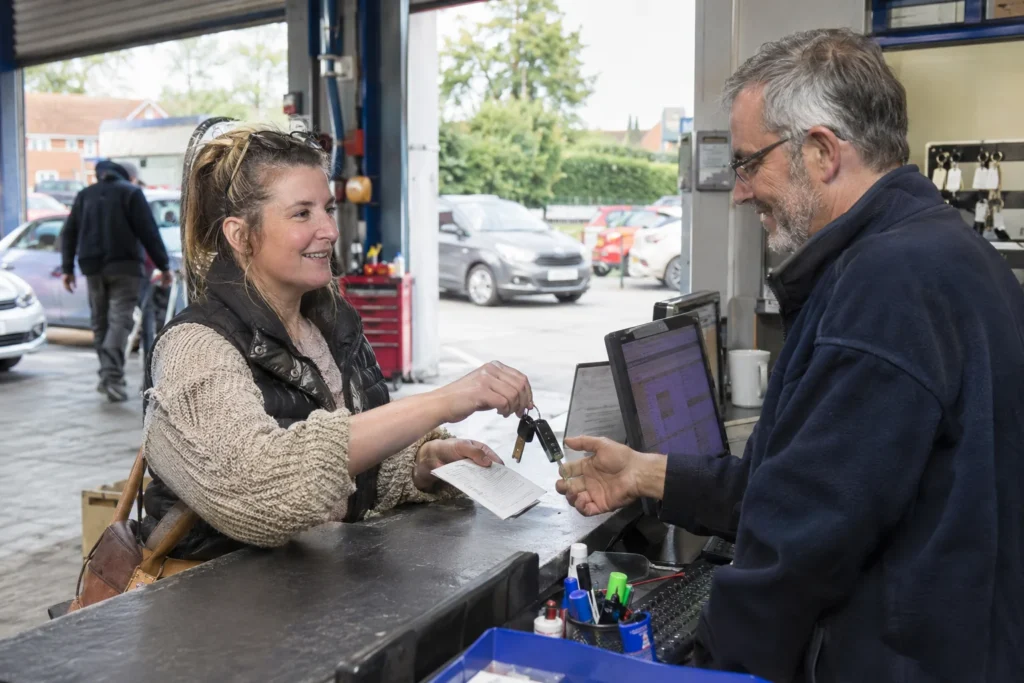
Keep a couple of appointments flexible so you can offer options to people working shifts or arranging a lift. If someone arrives early, tell them when you expect to see them and where they can wait. If an early arrival would delay someone with a fixed drop-off time, keep the slot you promised. Put parking and reception directions in the reminder so a customer doesn’t have to walk across a working yard to find you.
Source: HSE motor vehicle repair guidance on workplace transport
A simple confirmation could read like this.
Morning Jo, we’re expecting your car at 8.15 am on Tuesday. Please park in a marked drop-off space and bring your keys to the reception door. We’ve booked it in for the service and will call or text by 11 am with an update. If 8.15 won’t work, please call us so we can offer another time.
Missed slots cost as much as a queue. See how to reduce no-shows at your garage.
Send a short message or form so the customer can check the registration, best contact number and reason for the visit. Ask about anything which changes the handover, such as a locking wheel nut key for work that requires wheel removal, or a named driver for an agreed courtesy car. For a known fault, a short description of when it occurs gives you a head start. Leave a telephone option for anyone who prefers to talk and a staffed route for a change in circumstances.
Use the information you need to run the job. Keep personal details in the customer record and show staff the fields they need for their role. A registration and phone number on an unattended sheet can be visible to somebody waiting at the desk. Keep paper forms out of public view, collect only what you need and set a clear retention rule. The ICO’s principles cover data minimisation and keeping personal data only as long as you need it.
Source: ICO guide to the data protection principles
Keep a person in charge of changing the job. If someone adds a warning light or wants a different collection time at the counter, record it, say when somebody will assess it and confirm any change to the price or work with the customer. The Motor Ombudsman’s Service and Repair Code, which applies to accredited garages, covers agreed work and transparent pricing. A smooth handover can give you time to ask the right questions.
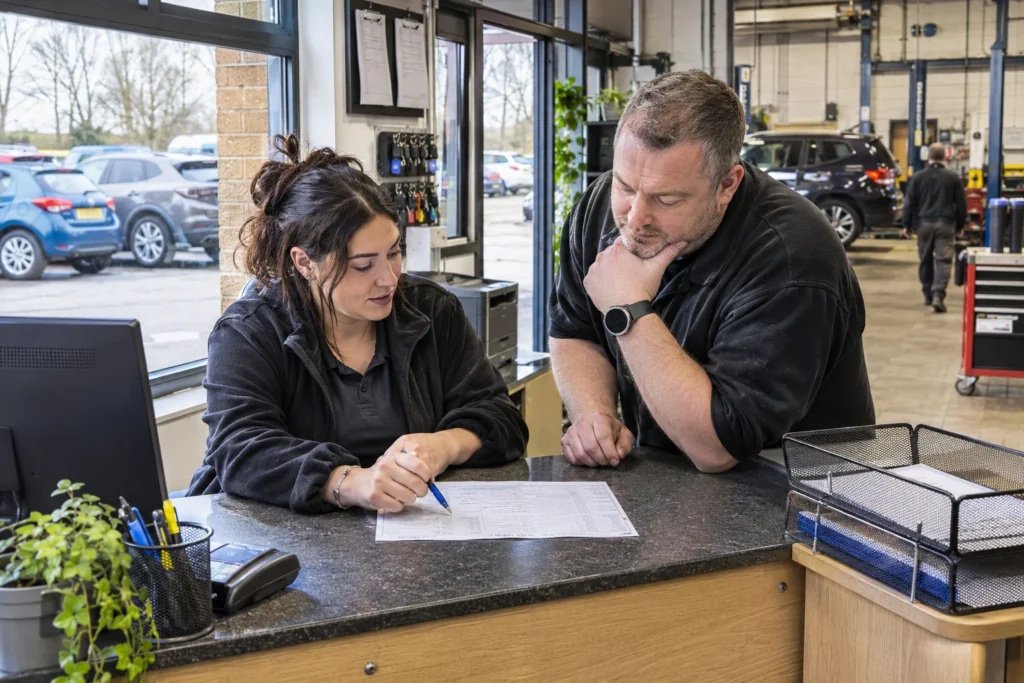
At the start of the day, tell the team who has the counter, who can pick up the phone and where the keys go once a vehicle has checked in. A note on the diary that simply says “arrived” has limited use. A clear handover might say “keys tagged, parked in space three, number confirmed, technician to call about the noise before starting”. A visible status makes it easier for a colleague to answer a customer’s question without starting the conversation over.
Keep one quick procedure for a key drop and another for longer conversations. Order parts, print any necessary paperwork and check courtesy-car availability ahead of the rush. If a complex discussion starts to hold up the line, explain when you can give the customer proper attention and offer a call or a separate slot. If the booking changes, update the person taking the car next so the workshop has the same information as reception.
Some larger operations have tried digital self-service check-in. Test your own arrival windows and customer messages before deciding how much technology you need. If you eventually add electronic check-in or a key drop, keep an assisted route and work through who verifies the car, job and keys.
Measure another five mornings with the new windows. Compare the typical wait, the longest wait, the time the first jobs actually start and how many bookings needed a change at the desk. Ask staff whether calls and authorisations stayed manageable. If customers wait less but jobs start late, move the early-ramp work into the first window. If one kind of job regularly takes longer to check in, give that intake a longer slot and see what happens to the rest of the morning.
Build the timings into the booking confirmation once they work. Garage Invoice supports booking forms and appointment details, so you can see the scheduled job and its status together. Start with a morning you know well. You’ll know you have the balance right when the next customer has time to describe the knock and the five behind them are no longer all standing there.
Read more: Garage Invoice appointments guide
