You already send cars down the road for their MOTs. The tester’s diary fills up, somebody has to move the keys around, and every customer thinks you know exactly when their car will be back. Bringing the tests in-house sounds like the obvious fix. Then you price the equipment and realise how many £50 tests it takes to get your money back.
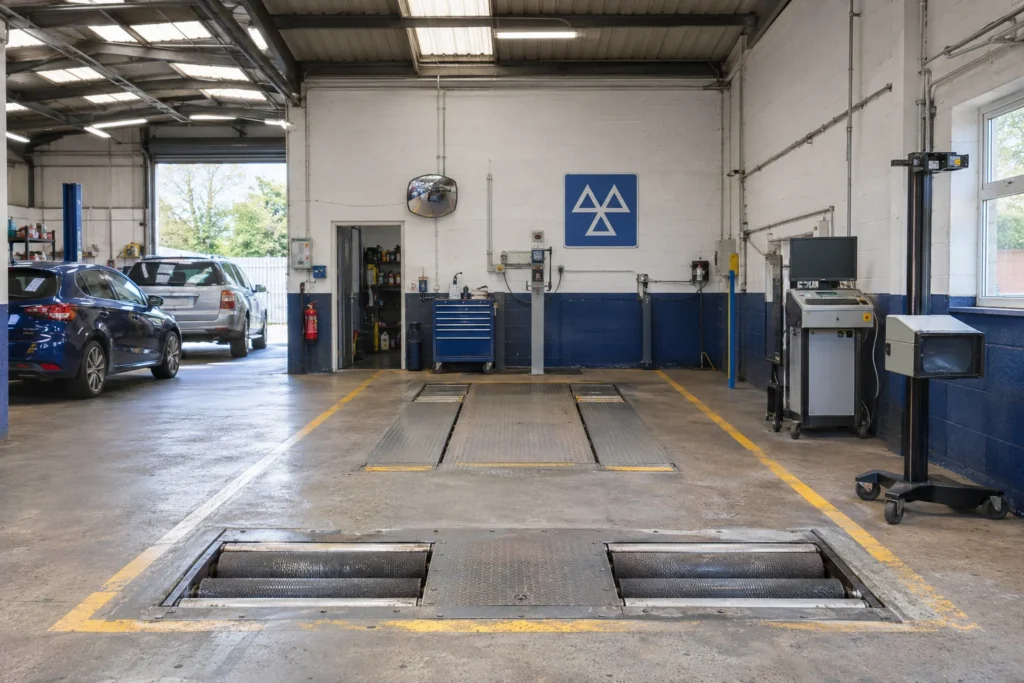
An MOT bay is worth pricing up if you can fill it with paid tests, staff it reliably and keep your existing repair work moving. Start with the tests going through your own diary. They tell you more about your chances than the number of cars driving past your front door.
DVSA recorded about 35.48 million initial MOT tests in Great Britain in 2025–26. About 33.31 million were in its combined Class 3 and Class 4 category, which includes cars and qualifying vans. It also recorded 23,092 private MOT test stations across all classes. That shows the size of the market and how many businesses already serve it. To see who tests what near you, use the DVSA list of active stations, which includes addresses and vehicle classes.
Sources: DVSA initial MOT tests by class · DVSA station and tester counts · DVSA list of active stations
Open your last 12 months of job cards. Count the tests you arranged, by month and vehicle class. Put work you turned away in a separate column, with the reason if you have it. Ten people who needed a test the same afternoon are a different prospect from ten loyal service customers who would happily book next week. If a regular fleet says it will move its vehicles to you, ask how many and when their tests fall due.
Keep Class 7 demand separate. A van owner may call everything a Transit, but the vehicle’s class depends on its details. A standard Class 4 light goods vehicle is up to 3,000 kg design gross weight. The GB maximum fee for a standard Class 4 car is £54.85. The maximum for the Class 7 goods vehicles listed by GOV.UK is £58.60. Check the class you need before you price a lift, mark out a bay or count a fleet’s tests in your forecast.
In a supplier article posted on the Garage Equipment Association website in early 2026, Concept Garage Equipment put Class 4 bay setup at £20,995 to £34,995, with a pit configuration at the lower end of that range. It is one supplier’s published range. Ask for a quote for your site that spells out what’s included, the VAT treatment and the cost of any separate building work.
Source: Garage Equipment Association supplier price example
Work through the quote with the layout in your hand. Check where the vehicle enters and leaves, where a waiting car goes and whether an existing ramp or technician will be taken away from repair work. Get prices for the floor or pit, power, fitting, equipment service and calibration, training, insurance and any rent or rates changes. Ask your accountant how VAT recovery applies to your mix of testing and repair work when you compare quotes. In particular, budget for any VAT the business cannot recover.
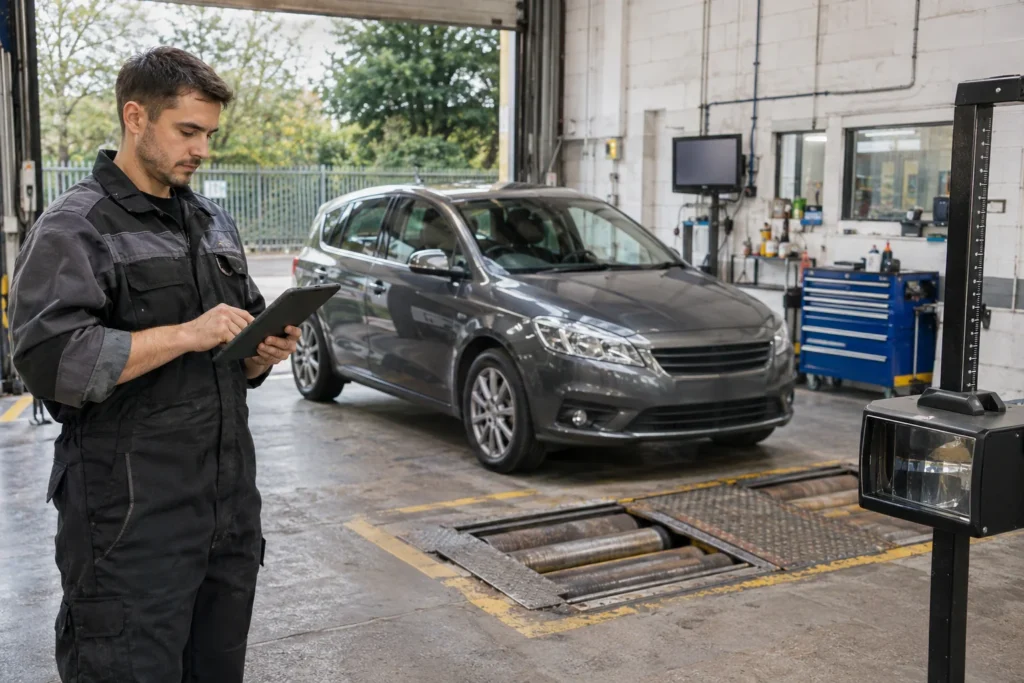
A paid test can still bring in its fee when the vehicle fails. DVSA currently charges £2.05 per slot and uses one slot when a pass is recorded. Some partial retests are free to the customer. For example, the GOV.UK guidance says there’s no fee for a qualifying partial retest when the vehicle stays at the test centre for repair and is retested within 10 working days. Make room for that time in the diary.
Sources: DVSA slot charges · GOV.UK MOT retest rules
Here’s an illustrative Class 4 budget. It assumes £36,000 invested upfront, a £50 test fee and a diary with 45 minutes of tester time per paid test. The flat £2.05 across each paid test is a conservative budgeting allowance that assumes one slot per test in the forecast. Record your actual pass-slot usage once you’re testing. The example puts a value on tester time, even when the owner is the tester.
| Item | Example |
|---|---|
| Fee per paid test | £50.00 |
| Tester time and associated labour cost | £19.00 |
| Budget allowance for DVSA slots | £2.05 |
| Payment costs and other direct expenses | £1.95 |
| Left per paid test towards bay costs | £27.00 |
| Extra monthly running costs such as maintenance, calibration and insurance | £900.00 |
| Monthly amount needed to recover £36,000 over 36 months | £1,000.00 |
At £27 left per test, you need 34 paid tests a month to cover the £900 running costs. You need 71 paid tests a month to also recover the investment over three years, before financing costs and tax. If the bay is selling tests for £45, with the other costs unchanged, the three-year target goes up to 87 tests a month. Give yourself a buffer for sickness, equipment downtime and the quieter months.
| Paid tests per month at £50 | After £900 running costs | After also setting aside £1,000 towards the investment |
|---|---|---|
| 55 | £585 | −£415 |
| 90 | £1,530 | £530 |
| 110 | £2,070 | £1,070 |
The £1,000 is a recovery target. If you borrow to pay for the bay, build a separate cash forecast with your actual deposit, loan repayments and interest so you can see what will leave the bank each month.
Say your current arrangement leaves you £8 per completed test after paying the other station and covering your direct handling costs. If all the tests you bring in-house would otherwise have earned that £8, the improvement is £19 per test. At that level, you would need 100 paid tests a month to cover the same £1,900 target. Newly won tests can bring in the full £27 contribution because you would not otherwise have had them.
There’s a cost when a test displaces profitable repair work, too. Compare what a typical repair and a test contribute after charging out technician time on the same basis. Then check how often the proposed MOT schedule would genuinely make you turn that repair away. A bay booked solid can still be the wrong use of your busiest technician’s Thursday.
Unsure how VAT applies to the test fee and any arranging fee? See do you charge VAT on MOT tests?
In England, Scotland and Wales, you need suitable premises, approved equipment and DVSA authorisation. The business must have an authorised examiner, an MOT business manager with the accepted training, and an approved tester for the classes it wants to test. Get approval in principle, which DVSA gives as part of the authorised examiner application, before you commit to building changes. If you’re already an authorised examiner, write to DVSA before altering the test facilities. If you’re buying a garage that already tests, the authorised examiner status does not transfer with the sale. Northern Ireland uses the separate DVA testing system, so the GB approval and fee model here is for workshops in England, Scotland and Wales.
Sources: DVSA station setup · DVSA equipment and premises approval · DVSA authorised examiner application · Northern Ireland DVA test centres
Put training and cover in the plan. Approved testers must complete at least three hours of annual training per group they test and pass the annual assessment. If only one person can test, work out what happens when they take two weeks off or change jobs. A reliable outside testing partner is useful even after your own bay opens.
First, see whether the tests you already handle can get close to the target at the price you can realistically charge. Then check what happens to repairs when the bay is busy and what happens to the bank when it’s quiet. Get a layout reviewed and compare two written equipment quotes with the same scope.
If the figures are tight, try a closer arrangement with a local testing station first. Fix the handover times, record the tests you genuinely lose and track how much repair work comes back after a fail. If that gives you clear, repeatable demand and the bay can earn its keep without pushing better work off the ramp, you have a reason to invest beyond wanting the keys to stay in your building.
