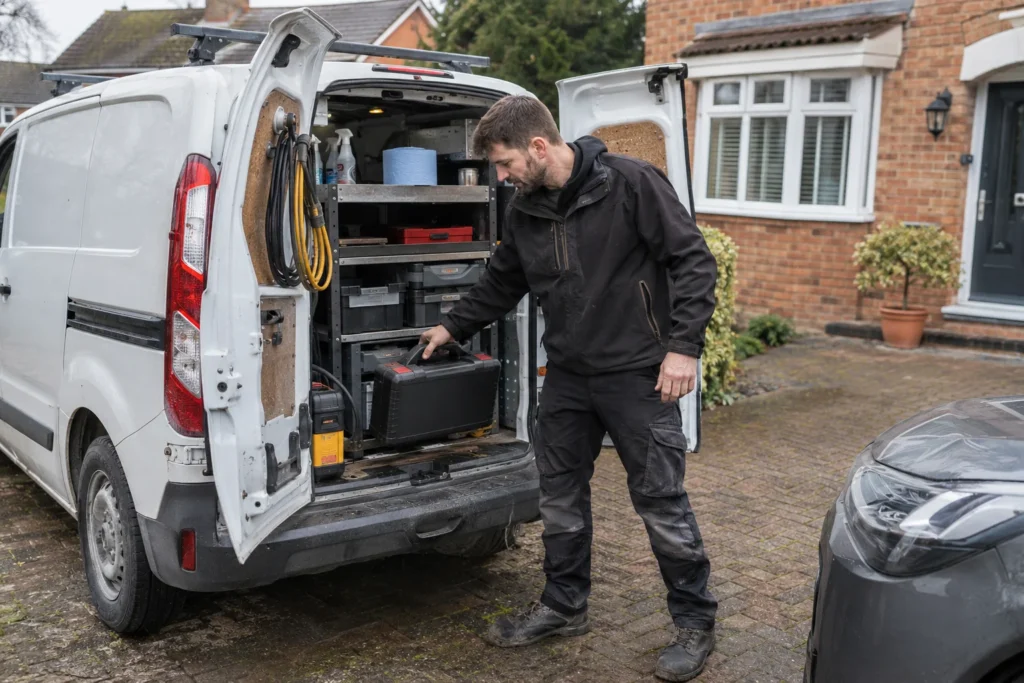
A customer rings about a car that won’t start. The job sounds like half an hour on the driveway. By the time you’ve driven there, asked what happened, carried out the agreed checks, explained the findings and written up the visit, you’ve used up a fair slice of the morning.
Price the time and costs of the whole visit first. Then give the customer one total they can understand, with a clear explanation of what you’ll try to find out and when you’ll ask before doing more.
The words call-out can mean several things. Some mechanics use them for attendance alone. Others bundle travel and an initial block of labour or fault finding into one fee. Pick a description that tells customers what they get. If attendance and a first block of testing are both required for a booking, show the combined price for that booking before anyone commits. The Competition and Markets Authority says consumer prices should include unavoidable charges that can reasonably be calculated.
Source: CMA guidance on clear consumer pricing
| Model | What you could include | What to make clear |
|---|---|---|
| Separate attendance and labour | Travel plus a separately priced first block of work | The combined total payable to book any required attendance and work |
| Visit with initial time included | Travel and a set amount of time on the vehicle | The included time and the rate or quote for any further work |
| Fixed first-stage diagnostic | Attendance and a defined investigation for a symptom or system | Which checks are included and how you’ll report the outcome |
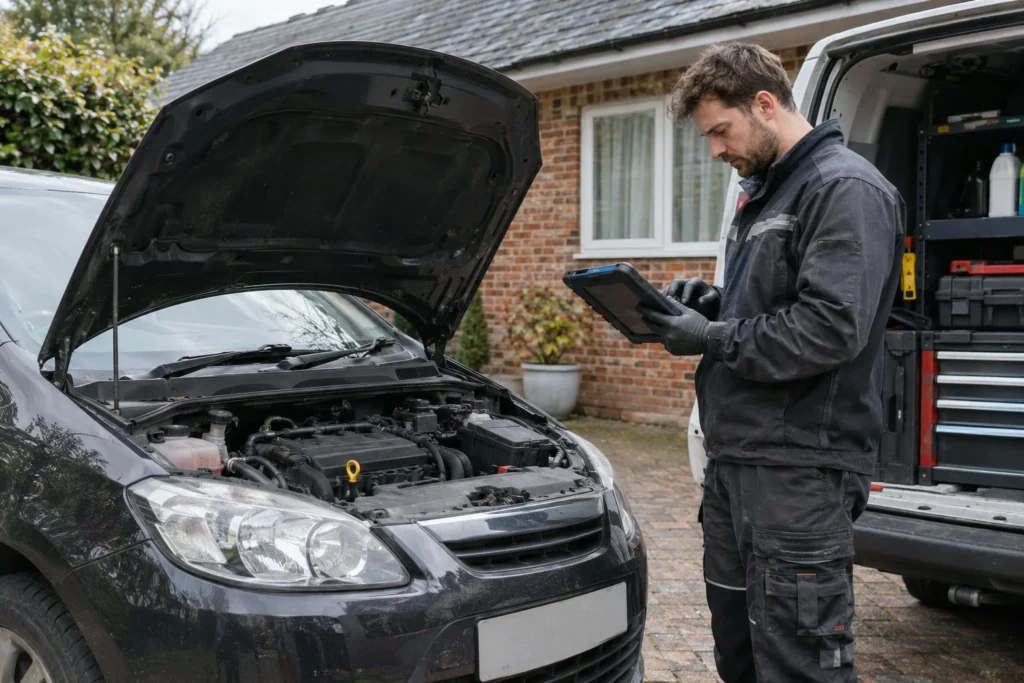
An initial scan can be one of the checks. A customer asking you to find out why the car cuts out may need more than a code read. Describe the checks you can reasonably carry out in the first session and how you’ll explain the result. Price any larger investigation as a separate, agreed step.
These were public listings checked on 15 November 2026. Compare the service and the time included. The figures come from three operators with different coverage and booking terms.
| Operator | Published offer |
|---|---|
| Russell Automotive, Leeds and West Yorkshire | £75 for call-out and diagnostics, including up to the first 30 minutes of labour. Its published job example shows further labour and parts separately. |
| SP88, parts of south London and nearby areas | A £100 diagnostic appointment including travel and up to an hour of testing. Its booking page lists a £20 deposit and quotes repairs, parts and extra time separately. |
| Manchester Vehicle Solutions | An initial diagnostic scan and assessment from £55. Its page also says it charges no separate local call-out when booked repair work goes ahead locally. |
Russell Automotive price list and job example · SP88 booking page · Manchester Vehicle Solutions guide prices
Count the round-trip time, the time on the vehicle and the time between the call, the job notes and the invoice. Then count the miles, parking or road charges, consumables and payment fees where they apply. Use the cost of running your van and the amount of work you actually book when you build your figures.
For an hourly budget, estimate what you need to pay yourself or a technician, then allow for relevant overheads such as insurance, diagnostics subscriptions and equipment. Divide by the realistic hours you can allocate to visits. Set aside time for training, maintenance and gaps in the diary. If you use a separate rate per mile, keep the same van costs out of the hourly budget so they only appear once.
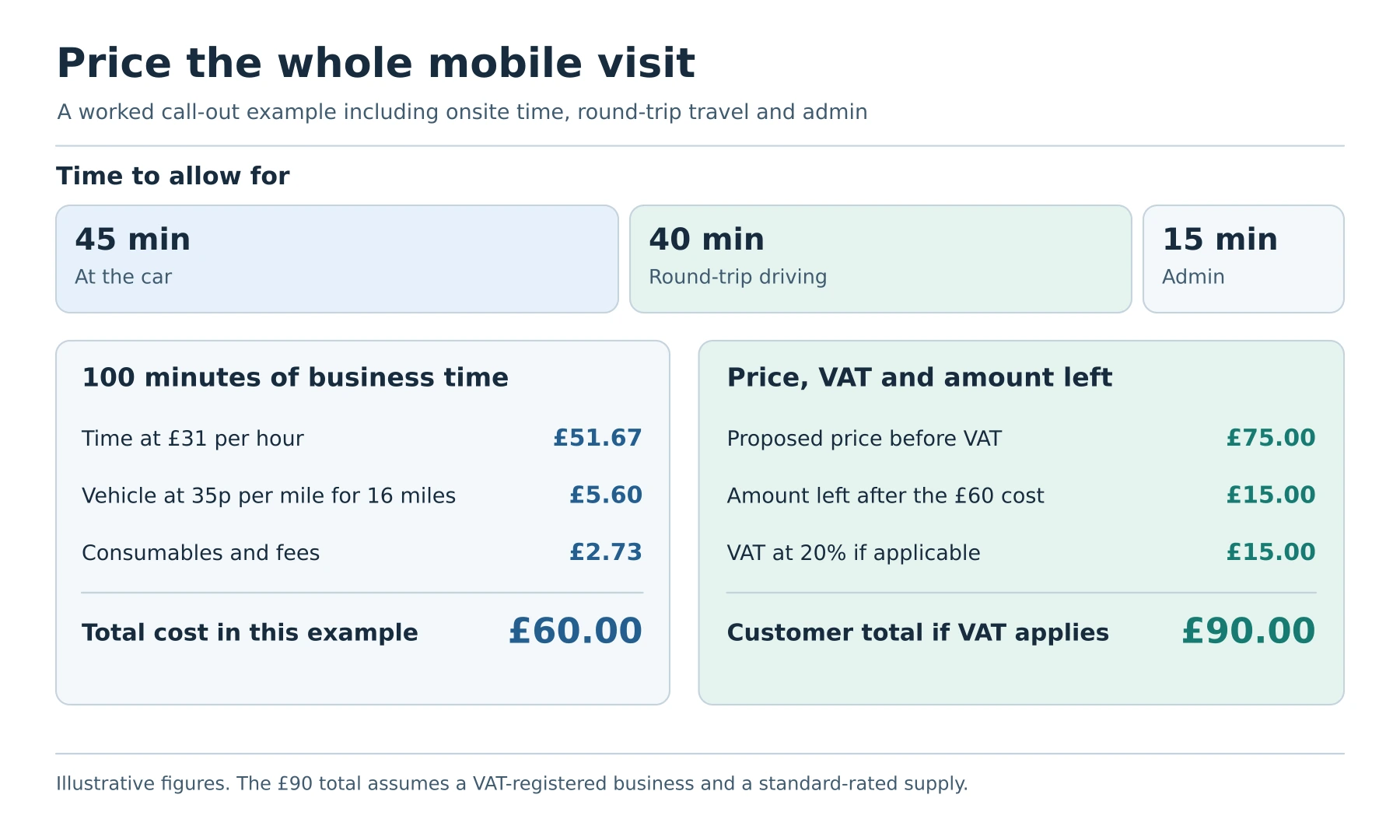
This example uses a £31 hourly cost budget, an assumed 35p per mile, and a small allowance for direct visit costs. These figures are illustrative. They exclude any recoverable input VAT.
| Item | Assumption | Cost |
|---|---|---|
| Time on site | 45 minutes | |
| Round-trip driving | 40 minutes | |
| Booking, notes and payment | 15 minutes | |
| Total time | 100 minutes at £31 per hour | £51.67 |
| Vehicle costs | 16 miles at 35p per mile | £5.60 |
| Other direct visit costs | Consumables and fees | £2.73 |
| Total cost | £60.00 |
A price of £75 before VAT leaves £15 after these allowances. That’s 20% of the selling price before VAT. The calculation for a 20% margin is £60 ÷ 0.80. If you’re VAT registered and the visit is standard rated, the customer total is £90, including £15 VAT. Use your applicable VAT treatment.
Sources: HMRC VAT rates · HMRC guidance on charging and reclaiming VAT
Now test a late finish. If the 100-minute visit in that example takes 25 minutes longer, with the same mileage and fees, it uses about £12.92 more time. The original £15 falls to £2.08 after the same cost allowances. Check how often that happens, and set the point at which you’ll stop and agree extra time. A busy day of small overruns can look productive in the diary and bring in very little at the end.
A VAT registration change can affect how much a consumer pays or how much you retain at the same consumer price. Check your position as turnover grows. As of November 2026, HMRC’s main registration tests are taxable turnover above £90,000 in the last 12 months or an expectation that taxable turnover will exceed £90,000 in the next 30 days alone.
Source: HMRC VAT registration guidance
Just starting out? See how to start a mobile mechanic business in the UK.
Ask for the registration, postcode, symptoms, whether the car can be accessed and whether there’s space to work safely. Then confirm the amount for that address. Include any mandatory travel charge and VAT where applicable. If you advertise a location-dependent price before you can calculate the total, make the calculation method as prominent as the part of the price you can show.
Source: CMA guidance on what to show when the total depends on the customer’s circumstances
The initial visit to your address costs £90 including VAT. That covers travel and up to 45 minutes of initial checks for the starting fault. I’ll explain what I find and what I recommend. The £90 covers that agreed visit if a repair needs more time or a return appointment. I’ll give you the price and ask before going further.
Tell the customer whether you’ll apply any of the visit fee to a later repair. If you offer a credit, say how much it is and the conditions for using it. Agree the price or an authorised limit for work beyond the first stage, then keep the customer’s approval with the job. If the extent of a repair becomes clear only after you test, give the price for that next stage when you know the work involved.
Keep any cancellation or access charge clear before booking and check that your terms are fair. Many distance or off-premises consumer service contracts carry cancellation rights. If a customer wants work to begin during a cancellation period, the timing, information and express request requirements matter. The urgent repair exception has a limited scope. A blanket deposit rule can create problems if the booking qualifies for a refund.
Sources: Trading Standards guidance for Great Britain on off-premises sales · Northern Ireland guidance on distance and off-premises contracts · CMA guidance on fair deposits and cancellation charges
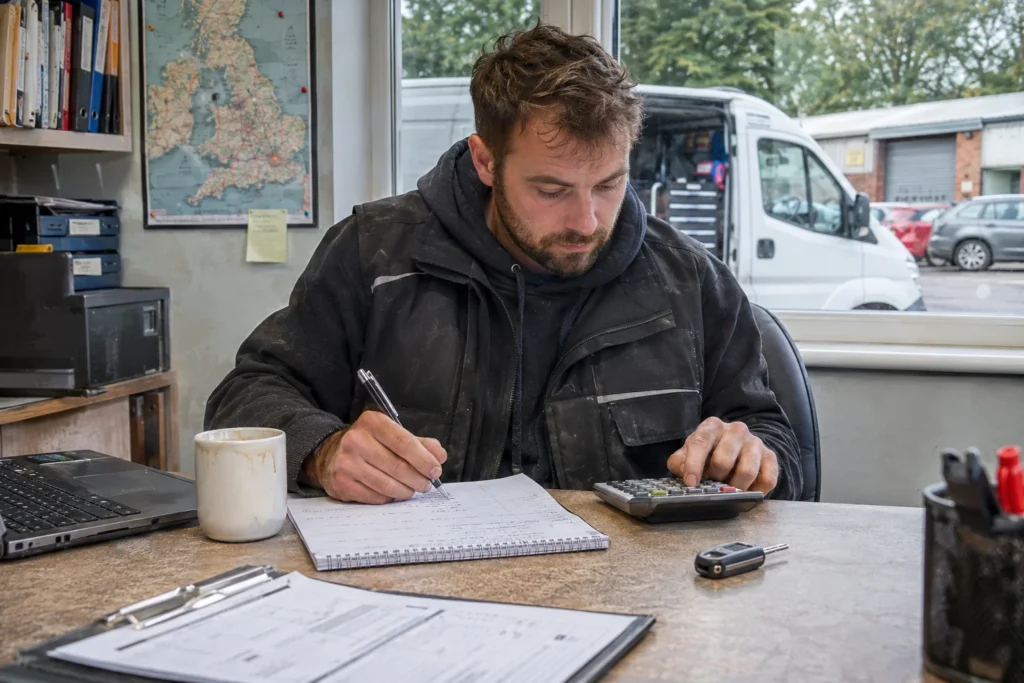
Write down the reported symptom, the work you agreed, the tests you could complete, the evidence and the next step. If the fault didn’t appear, say what circumstances you tried and what you could establish. The customer should be able to see what the first payment covered and decide whether the next test or visit is worth booking. Supply the agreed service with reasonable care and skill.
Source: Trading Standards guidance on supplying services
At the end of each week, check actual time, mileage, money collected and how many visits led to further paid work. Review outliers by postcode and fault type. If a certain job repeatedly takes longer than your initial allowance, give it a different first-stage price or change the time you set aside. Price the visit you actually deliver.
Read more: Garage Invoice labour rate calculator · Garage Invoice quote and estimate templates
