The first job’s ready, the keys are in the car and one of the lift arms feels different from yesterday. The last examination report is still in date. Can you use the lift? If the arm lock looks damaged or won’t engage properly, stop and report it. The report describes what the examiner found on the day. The check you do before the next job is what can pick up a fault that’s developed since.
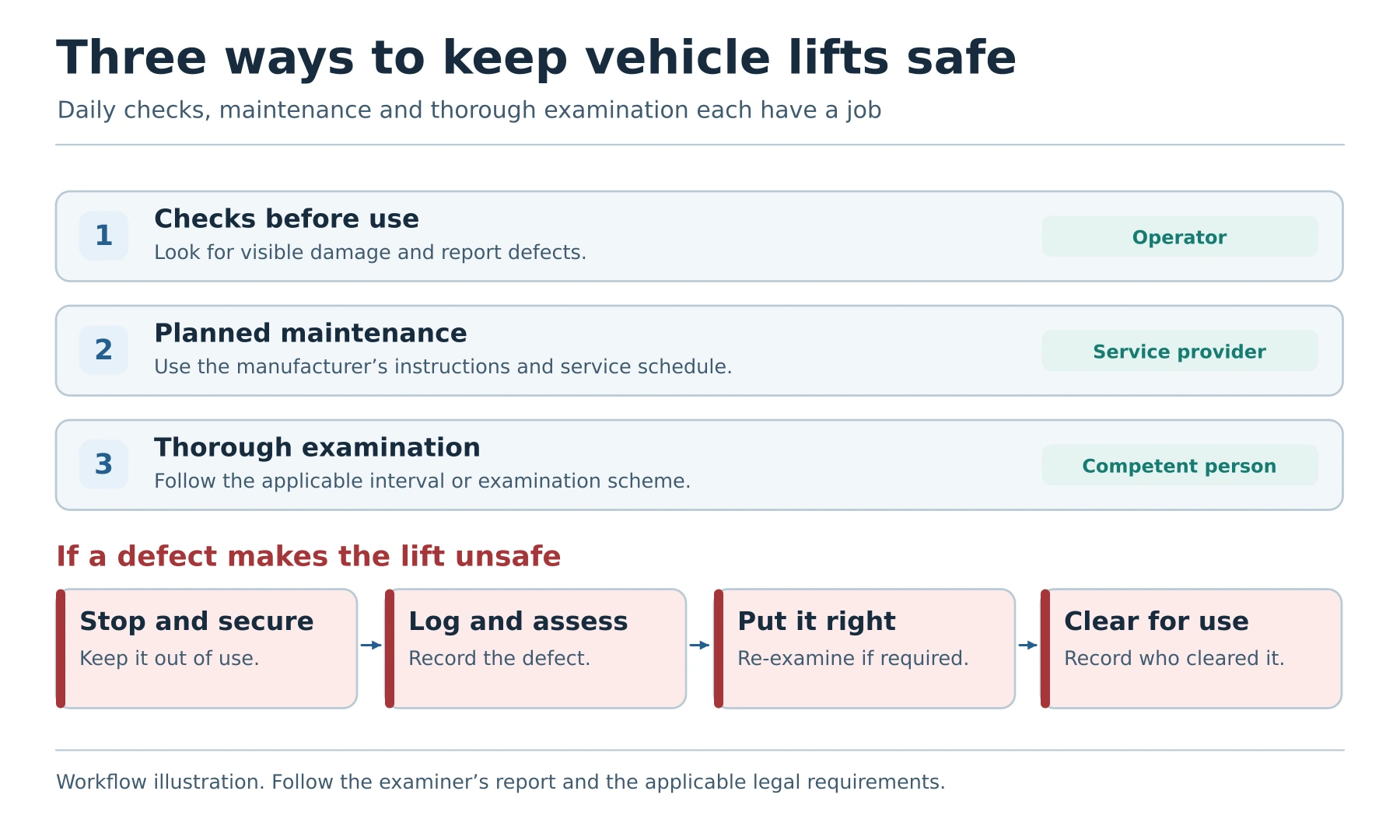
A garage lift needs three kinds of attention. The technician checks it before using it, maintenance keeps it in working order, and a competent person carries out the thorough examination. Give each job an owner and somewhere to record what they found.
| Check | Who does it | What it’s for |
|---|---|---|
| Before-use checks | A trained operator | Spot a fault or unsafe condition before lifting the next vehicle. |
| Planned maintenance and inspections | A person competent for the work | Keep the lift in good repair and check what might deteriorate between examinations. Use the lift instructions and the risks of your work to set the schedule. |
| Thorough examination | A competent and impartial examiner | Examine safety-critical parts, assess defects and provide a written report with the next examination due date. |
Book both the maintenance and the thorough examination. If your supplier offers a combined visit, ask who does each job and what documents you’ll get. A servicing invoice is useful evidence that maintenance took place. A report of thorough examination has its own specific contents.
Sources: HSE guidance on servicing and thorough examination · HSE guide to thorough examinations
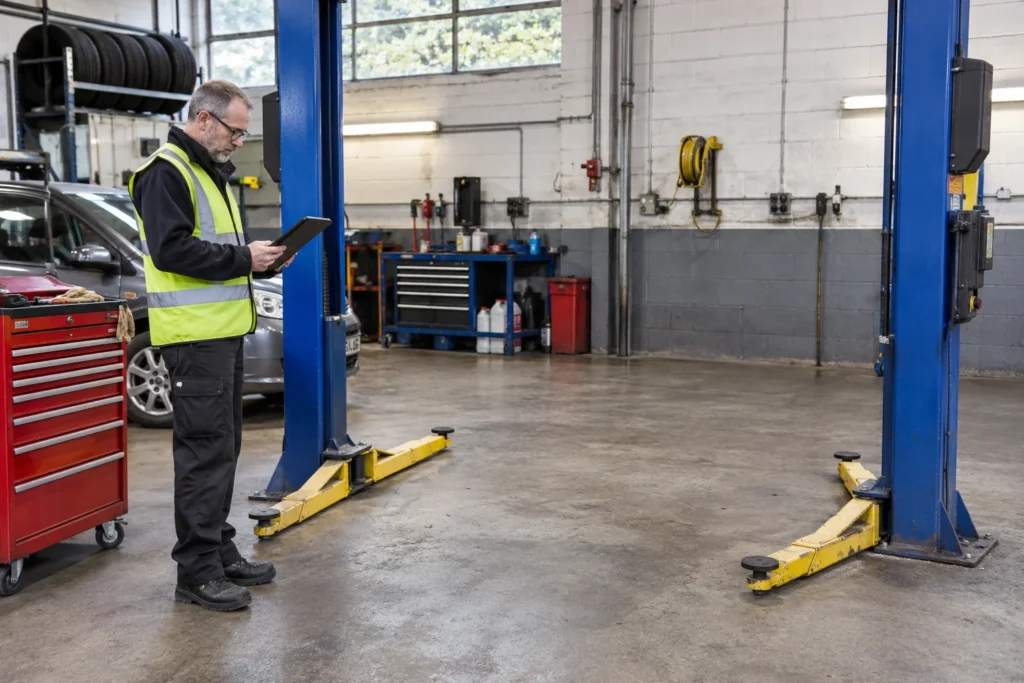
Still choosing a lift? See two-post, four-post or scissor lift?
In Great Britain, the Lifting Operations and Lifting Equipment Regulations 1998, or LOLER, set default intervals of six months for equipment used to lift people and for lifting accessories, and 12 months for other lifting equipment. Examination can also be carried out under a scheme drawn up by a competent person. Which arrangement applies needs to be established for the particular equipment and how it’s used.
Source: HSE guidance on examination intervals and schemes
For a vehicle repair garage, HSE’s sector guidance recommends six-monthly thorough examinations for vehicle lifts. It says a risk assessment for work regularly carried out beneath raised vehicles should point to six months between examinations. The same guidance highlights the six-month default where a person is elevated inside the vehicle. If you’ve been told your lift is on a different timetable, ask the competent person to confirm the basis, the scheme if used, and the applicable due date. Northern Ireland has its own LOLER and PUWER regulations, with guidance from HSENI.
Sources: HSE motor vehicle repair guidance, paragraphs 202 and 203 · HSENI work equipment and machinery guidance
The calendar is only part of it. Arrange a thorough examination before use when a new or relocated lift depends on correct installation. Ask the examiner what’s required after circumstances that could affect safety. Examples include damage, failure, major changes, repair or replacement of a critical part, and a long spell out of use. HSE explains that a declaration of conformity less than a year old can meet the first-use requirement where the equipment has had no on-site assembly. The installation requirement still applies to equipment whose safety depends on how it is fitted.
Source: HSE guidance on when examinations are required
Give every lift a recognisable name and keep the make, model, serial number, rated capacity, location and current report together. The people booking repairs should know which bay the examiner needs and when. Use the next due date shown on the report, and book early enough to allow for somebody being ill, a cancelled visit or a fault that takes time to fix.
Prices for a thorough examination vary by provider and area, so get a quote and check the scope, location, VAT and call-out costs on your quote. If you budget an illustrative £150 per examination for two lifts on six-monthly schedules, that’s £600 a year for four examinations. Allow 90 minutes of bay time per examination in this example, and that’s six bay hours to reserve across the year. Ask about actual timings and spread the bookings where practical so one lift can still work. Keep servicing, repairs and any return visits separate in the budget.
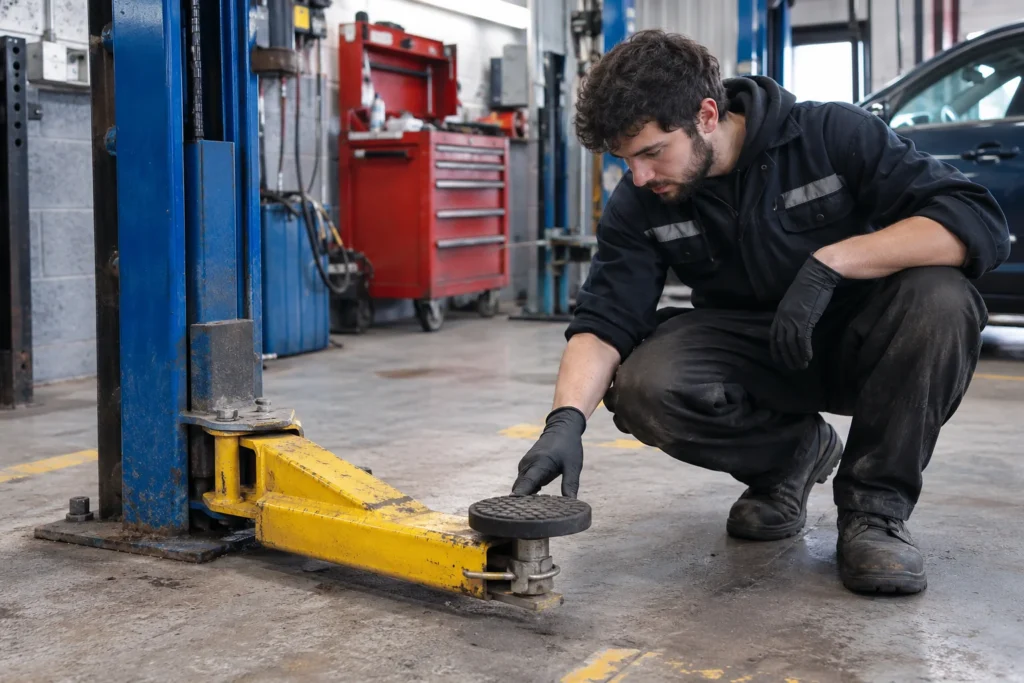
Start with the lift manufacturer’s instructions and the training for that model. Your local checklist should make clear what to look at, what makes a lift unsafe to use, who to tell, and where to mark it out of service. On a two-post lift, the condition of the pads and operation of the arm locks deserve particular attention. HSE has reported two incidents in which vehicles fell from two-post lifts and struck mechanics, including one fatality. HSE advises checking that the arm locks engage securely and that lifting pads are positioned correctly before raising the vehicle to full height.
Sources: HSE guidance on two-post lift accidents and arm locks · HSE working-under-vehicles guide
Keep the lift’s vehicle and load limits part of the job. Check the correct lifting points for the vehicle and whether the work changes its balance. Removing a heavy assembly can change the load on the lift. Make sure your team knows when to stop and check the lift and vehicle manufacturer’s instructions for the planned work.
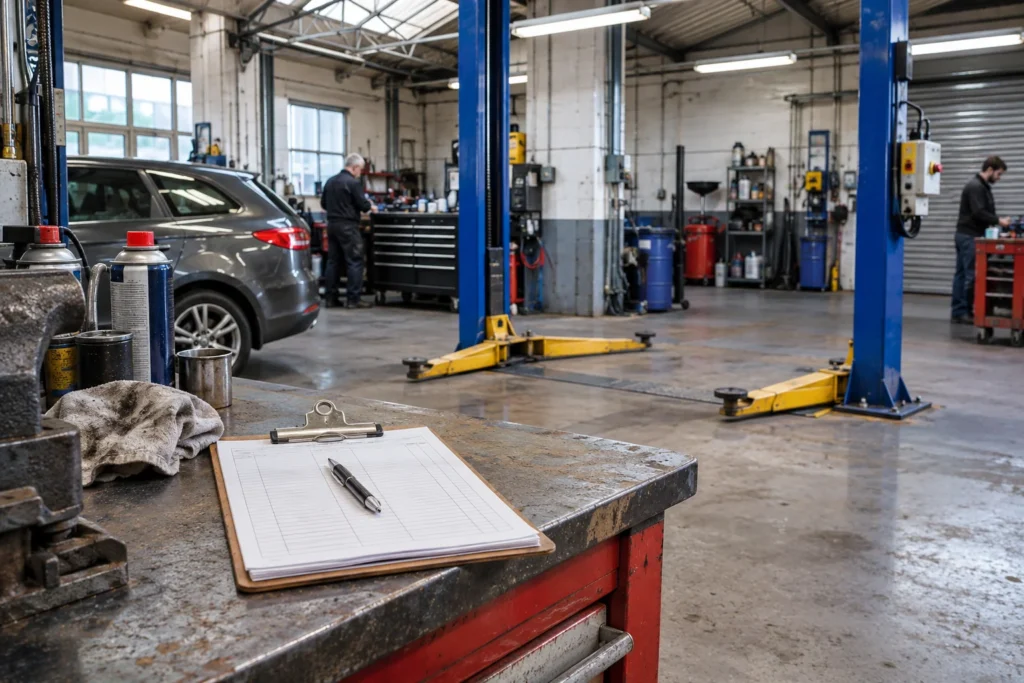
Ask what experience the examiner has with your type of lift. HSE expects practical and theoretical knowledge sufficient to identify defects and judge whether they affect continued safe use. An in-house examiner can be suitable if they can act independently and impartially. HSE says this should be someone other than the person who performs the routine maintenance, since that would mean assessing their own work. Tell the examiner about alterations, recent faults, unusual incidents and any changes in what you lift. The examiner decides what checks and tests are needed.
Source: HSE competence, impartiality and examination guidance
When the report arrives, match it to the right lift, record the next date and assign every action to somebody. Keep the report available with the maintenance and defect history. In Great Britain, keep in-service thorough examination reports for at least two years or until the next report is made, whichever is later. Keep the installation examination report for as long as you use the lift where it was installed. Electronic records work if you can produce a written copy when needed and protect them from unauthorised changes.
Sources: HSE guidance on reports and records · HSE guide, table 3
If an operator finds a missing, loose or ineffective arm lock, stop using the lift, make sure other staff know it’s unavailable and follow your isolation and reporting procedure. If a vehicle is already raised and unstable, keep people clear and arrange competent assistance. Record what happened and follow through on the repair and any examination required before releasing it to the team.
Source: HSE safety guidance on two-post lifts
Read the report’s instructions for any defect. An immediate danger means keeping the lift out of use until it is safe. Where a report gives a deadline for a defect that could become dangerous, get the work done by that date or stop using the equipment at the deadline. The examiner has reporting responsibilities for serious defects. In Great Britain, RIDDOR lists the collapse or overturning of lifting equipment, or the failure of any load-bearing part, as a reportable dangerous occurrence.
Sources: HSE guidance on defects found during examinations · HSE RIDDOR dangerous occurrence guidance
Make the out-of-service decision visible where the next person books or starts work. A lift with a red tag should also be unavailable in the diary. Close the record only once the work and any required examination are documented and the person responsible has released the lift.
