An oil service takes up a slot in the diary. The old oil and filter take up space for weeks. Add a stack of tyres, a few spent batteries and a collection driver at the door, and the job starts costing time again if no one knows which container to use or where the paperwork goes.
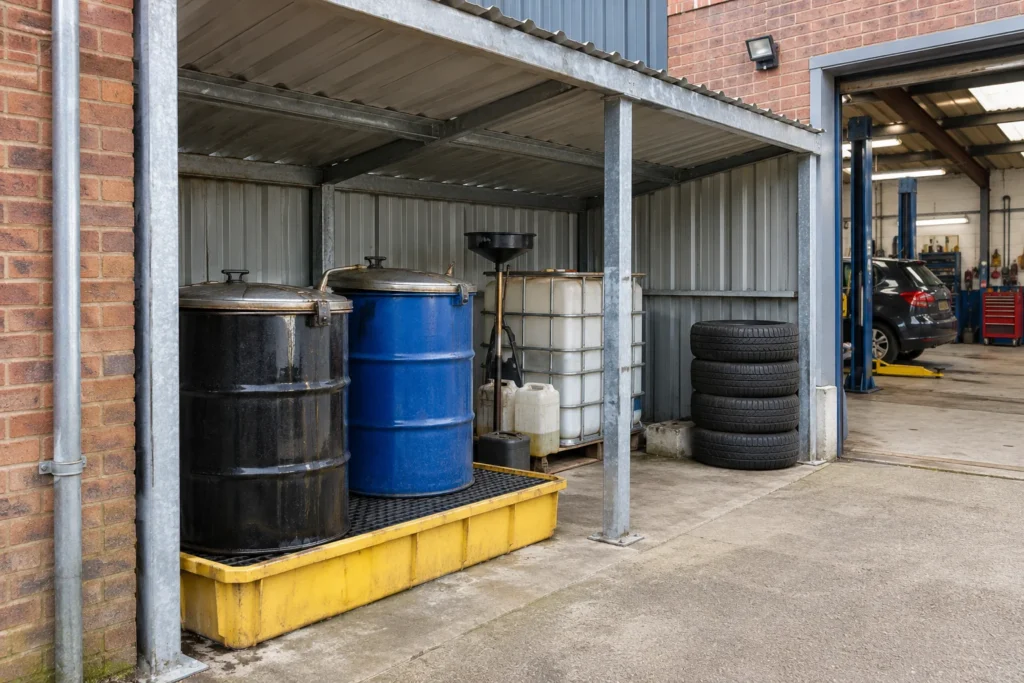
A good waste setup makes three things clear to everyone. Which waste goes in which container, who is authorised to take it, and which record proves where it went. The details vary across the UK, especially for hazardous waste, but the same orderly workflow saves time in any workshop.
A waste code describes what’s being handed over. The correct classification matters when you label containers, ask for prices and fill in the collection record. These are common examples from the Environment Agency’s vehicle and oily waste guide. Check the actual material, especially if it’s a mixture or you aren’t sure what was put in it.
Sources: GOV.UK vehicle and oily waste classification · Vehicle and oil waste codes in the UK technical classification guidance
| What comes off the job | Common classification example | What to arrange |
|---|---|---|
| Used engine, gear or lubricating oil | Hazardous. The appropriate code depends on the oil, such as 13 02 05* for mineral-based non-chlorinated engine, gear and lubricating oils. | A compatible, closed and labelled oil container with spill containment, away from drains. |
| Used oil filters | Hazardous, 16 01 07* | A compatible, closed collection container agreed with the contractor. |
| End-of-life tyres | Non-hazardous, 16 01 03 | A designated store and a collection frequency that keeps the stock manageable. |
| Lead-acid car batteries | Hazardous, 16 06 01* | Suitable protected storage and a collection route for that battery type. |
The asterisk on a waste code marks a hazardous entry. Give antifreeze, brake fluid, fuels and other wastes their own clearly identified routes. Someone emptying a tray at closing time should be able to identify the right container without asking. If an unknown liquid goes into the oil, flag the container and ask the contractor how to classify it before the next pickup.
Sources: GOV.UK vehicle fluid classifications · Hazardous waste separation and producer duties
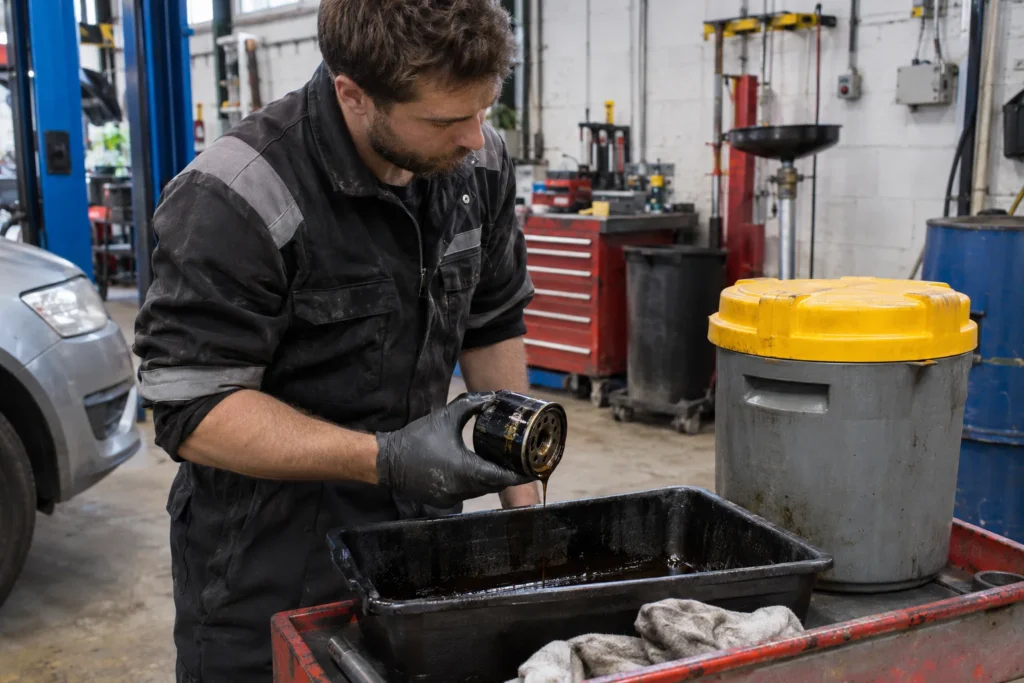
Choose tanks or drums that suit the materials and ask about secondary containment, which is the bund or tray that catches a leak. Keep storage away from drains and vehicle movements, and check the rules that apply to your premises, capacity and nation. England’s business oil storage rules apply to containers capable of holding 201 litres or more of covered oils. Waste mineral oils drained from vehicles fall outside those particular rules. Apply the waste storage and pollution prevention requirements for the oil you actually keep. Check the local rules before ordering a tank or treating waste on site. In England, T14 is the specific exemption route for qualifying treatment of used oil filters. Check its conditions and current changes before draining or crushing filters as a waste treatment activity.
Sources: GOV.UK business oil storage rules · Environment Agency T14 exemption
Agree separate storage and collection for different battery types. A conventional lead-acid starter battery and a damaged EV battery call for different arrangements. Bring in a competent specialist for a damaged or suspected faulty high-voltage battery or vehicle, and set the workshop’s emergency and handover procedure in advance.
Sources: HSE guidance on electric and hybrid vehicles · GOV.UK guidance for recovery operators working with electric vehicles
Ask for the carrier registration number and check it on the regulator’s public register yourself. If a broker books the collection, check who’s actually turning up and the appropriate registrations for the businesses involved. Ask for the name and address of the destination and check that the site is authorised for the waste stream. Save the check with your supplier details so somebody can repeat it when the contractor changes.
If you take waste away yourself, including collecting workshop waste from mobile jobs, check the registration and transport rules before making that part of the business. Ask the relevant regulator about storage at your base and what records and arrangements apply to your actual route.
Sources: England and Wales waste duty of care code and public registers · Northern Ireland waste carrier register · Business waste responsibilities
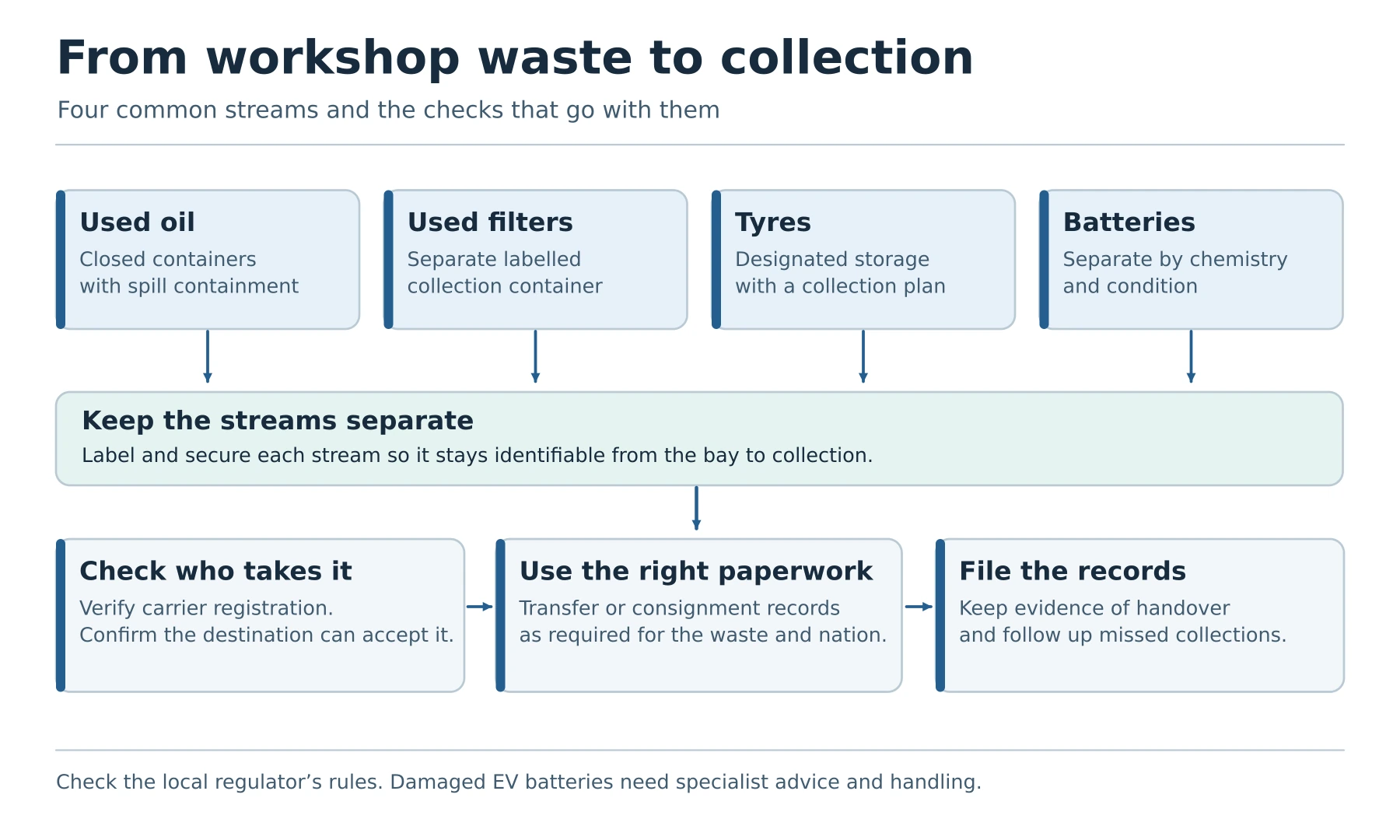
Keep a clear description, waste code and quantity for each stream, and record who collected it and where it went. In England, the producer normally uses a waste transfer note or an equivalent record for non-hazardous waste leaving the business and keeps the record for two years. Repeated transfers meeting the conditions can use a season ticket with a schedule. Hazardous waste uses a consignment note, and the producer or holder keeps a register for three years, including relevant paperwork from the destination.
Sources: England waste transfer notes · England hazardous waste producer records
| Where the garage is | Where to start for hazardous waste |
|---|---|
| England | Use the Environment Agency and GOV.UK producer guidance for consignment notes and the records you keep. |
| Wales | Natural Resources Wales explains the consignment process and when premises need registering. Its general registration trigger is producing or storing over 500 kg of hazardous waste a year. Check the detailed conditions for your premises. |
| Scotland | SEPA calls hazardous waste special waste. Use its special waste consignment process and the relevant SEPA-issued note or code. |
| Northern Ireland | Check NIEA guidance for consignment notes and when pre-notification is required before moving waste. |
Check the departure and destination rules before a cross-border collection. Digital waste tracking is also being phased in. The England and Wales phase that started in October 2026 concerns qualifying waste receiving sites. GOV.UK says transfer and consignment records still apply where required during the initial rollout. Ask your contractor what information they need and check the current guidance for your role.
Sources: Wales consignment guidance · Wales producer registration · SEPA special waste guidance · Northern Ireland hazardous waste guidance · Digital reporting scope and existing records
One published UK contractor price list checked in November 2026 quoted £95 for 240 litres of used oil filters and £105 for a 205-litre oil, oil-and-water or diesel uplift category. They’re prices from one provider. Ask about location, VAT, minimum charges, the containers and paperwork included, and whether a mixed or contaminated load changes the price. Tyre and battery collections may have different arrangements.
Source: Trade Waste UK published prices
For a simple comparison, suppose two quotes cover identical four-week collections and are both before VAT. Quote A is £55 for tyres, £95 for oil and filters, plus £31 for the visit, a total of £181. Quote B is £60, £78 and £15, a total of £153. The difference is £28 a visit, or £364 over 13 visits. These are illustrative figures. Confirm both contractors can legally take every stream, then compare what happens if you need an extra pickup or have fewer tyres one month.

Once a month, pick a recent collection and trace it from the container label to the paperwork and the final destination. Check there’s room until the next pickup and that the team knows where to put anything which needs separating. When the driver turns up, a member of staff should be able to identify the carrier, the waste and the record without an office hunt. That’s the point at which the job is finally off the workshop floor.
If you pass a disposal charge on to customers, show it as its own line. The free garage invoice template keeps parts, labour and other charges on separate lines.
