The customer has brought a laptop and asked if they can wait. Your receptionist has one spare chair, the MOT is due on the ramp in ten minutes and a car already in the bay needs a decision about a tyre. It’s the sort of morning that can make a separate lounge sound like a great idea. It can also make a clear booking window and a second chair the smarter first step.

A waiting area earns its keep when it helps you win or keep work at a cost your workshop can cover. Start with who actually wants to wait, what jobs your diary can finish on time and what else the space could do for the business.
Bridgestone published research in 2026 from a January 2025 online survey of 2,000 UK car owners. 30% said they’d pay more for a garage with a comfortable, welcoming waiting area. That’s what people said they would do. Use it as a reason to test how your own customers book and what they actually choose.
Source: Bridgestone survey and methodology
An RAC study published in 2025 reported that 27% of drivers saw getting a vehicle serviced or repaired as a hassle. Among that group, 68% cited getting to and from the workshop as a frustration. A place to sit can save a second journey when the job is short. A customer booking an afternoon repair may value a reliable finish time, help with transport or updates they can use to plan their day.
Source: RAC research on service and repair inconvenience
Independent garages already use different versions of this. Martin Matthewson in Basingstoke advertises a dedicated waiting area with Wi-Fi and refreshments. Ely Auto Care advertises a customer lounge where people can watch their MOT and also offers collection and delivery. These are examples of how the garages present their service. Your own appointment mix and room costs will decide whether a similar offer makes sense.
Sources: Martin Matthewson customer FAQ · Ely Auto Care
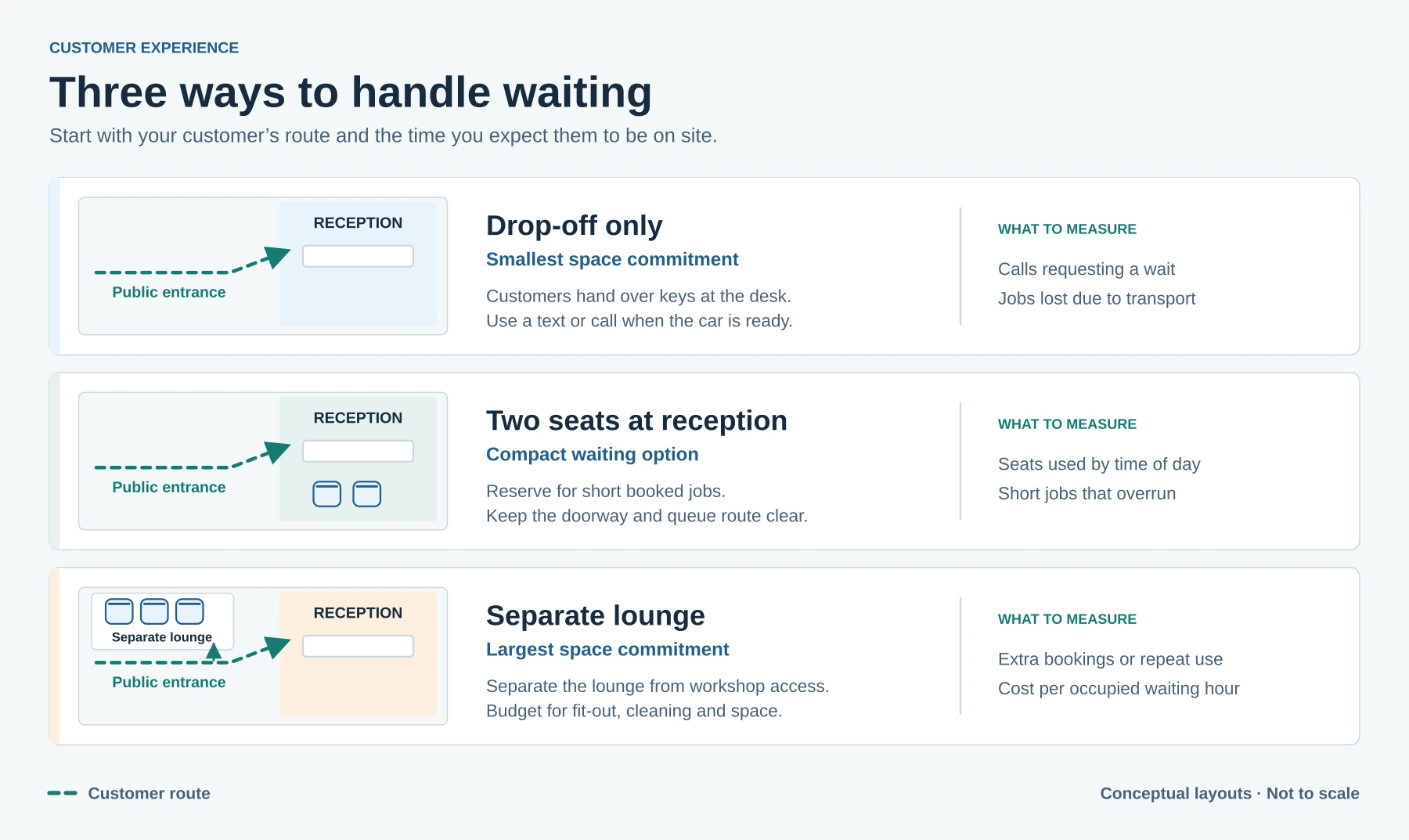
| Option | Best fit | What it needs |
|---|---|---|
| Drop-off and a text update | Long jobs, work waiting for parts, or customers who can get somewhere else easily | Clear check-in, a realistic update time and useful travel or collection information |
| A couple of seats off reception | A few short jobs each day and an existing safe, suitable customer space | Comfortable seating, a clear route, room around the desk and someone to keep customers informed |
| A separate waiting room | Regular demand for while-you-wait appointments and premises that can accommodate it | An accessible route, suitable separation from workshop traffic, ventilation, cleaning and clear appointment limits |
Start by defining the appointments you can offer while customers wait. A pre-booked MOT, a tyre job with the right stock already on site or a short inspection might suit a timed slot. A vehicle with an intermittent fault, a part that may need ordering or a repair with uncertain access calls for a different conversation. Use your own timings. A customer who sits down expecting 45 minutes will remember being left for two hours, even if the tea was good.
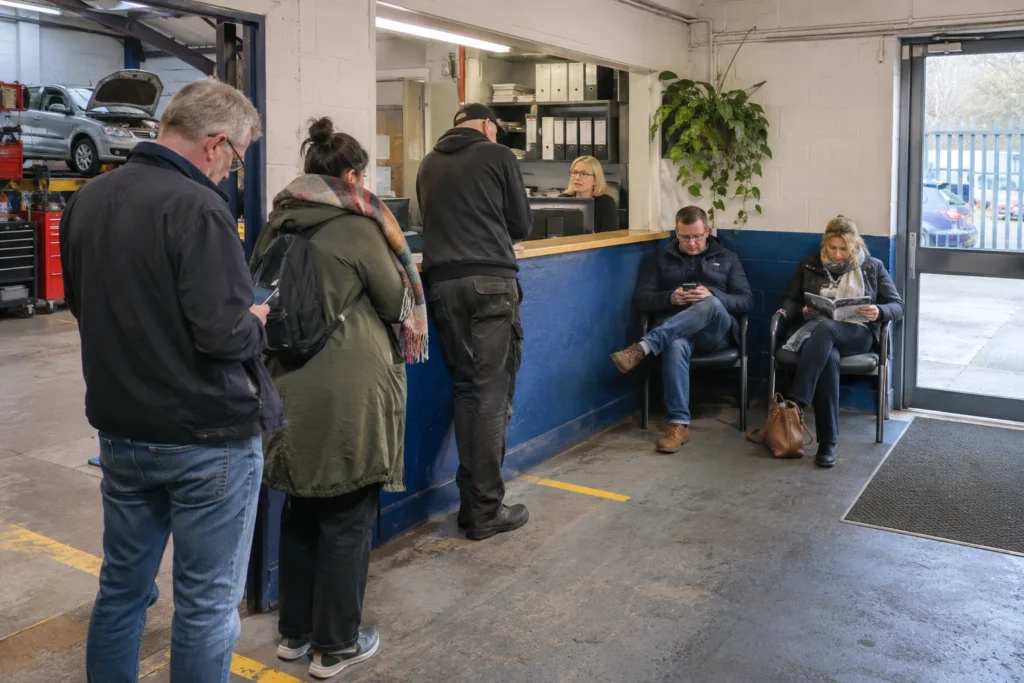
Give customers a seat that’s easy to find and a simple update about what happens next. Think about lighting, noise, where they put a bag, and whether a person using a mobility aid can get to reception and wait comfortably. Place seats within a safe customer area, away from garage vehicle movements and fumes. Keep walkways and exits clear. Check how toilet access, ventilation and safe escape arrangements work at your site, particularly if you make changes.
Sources: HSE guidance on pedestrian and vehicle routes · HSE guidance on workshop exhaust fumes · GOV.UK workplace fire risk assessment guidance
In Great Britain, service providers need to consider reasonable adjustments for disabled people. Planning a refit also means checking any building rules and approvals that apply. Approved Document M is guidance for England, and Northern Ireland has its own disability discrimination framework. Consider customers’ needs when deciding where to put the seats or how to offer an alternative route to the service.
Sources: GOV.UK disability guidance for service providers · Approved Document M · Equality Commission for Northern Ireland accessible services guidance
Suppose a garage could turn a small room into a customer lounge. These are example figures, all on the same cost basis. Use quotes for your own space and put a value on any useful activity you would have to move elsewhere.
| Cost | Example amount |
|---|---|
| Fit-out, spread over a 24-month comparison period | £2,400 ÷ 24 = £100 a month |
| Additional cleaning, heat and supplies | £85 a month |
| Value of the space currently used for parts storage | £90 a month |
| Total to cover | £275 a month |
The £90 is an opportunity cost. It represents a real alternative use or saving the garage would give up in this example. If your space would otherwise sit empty, or you can move the same stock without creating new cost or wasted time, use a different figure.
Suppose each extra job contributes £40 after parts, the labour cost you allocate to it and other costs that change with the job. Seven extra jobs a month would contribute £280 and cover the £275 example cost. If each job brings in £25 after those costs, you need 11 extra jobs. Use the pounds the garage keeps from the job. The amount on the invoice includes money that has to pay for the work.
A regular customer may appreciate the room and still have booked anyway. Some customers would have used the same slot without it. When the garage is already full, consider any other work a waiting appointment might displace. The useful question is how much business the room helps you win, keep or serve more efficiently compared with the setup you have now.
Need your own hourly figure first? The free labour rate calculator works it out from your wages, overheads and billable hours.
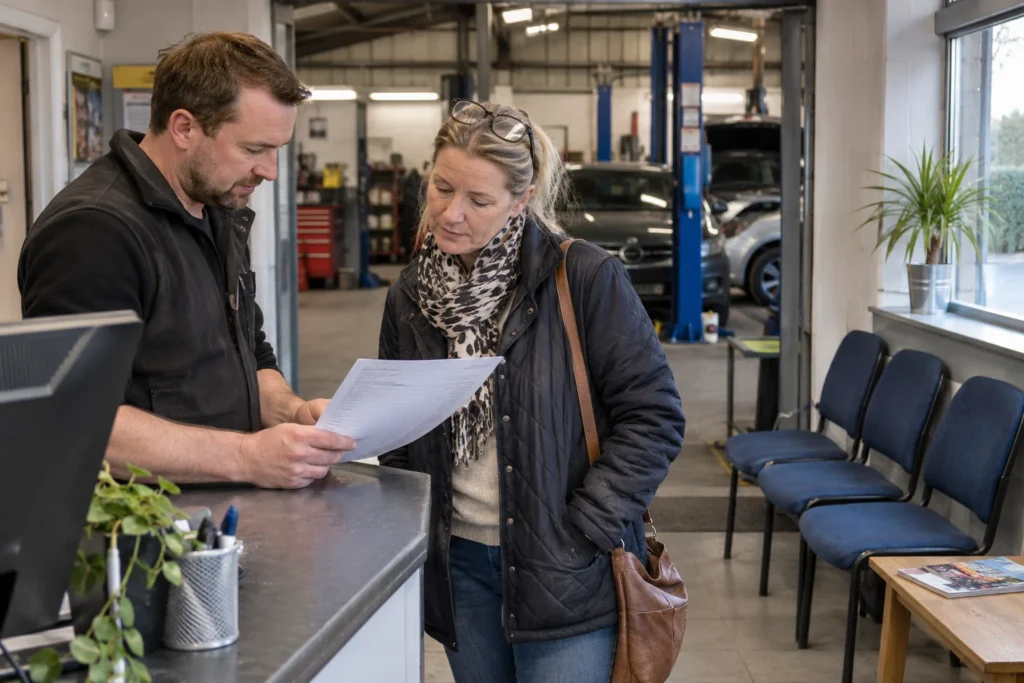
Set aside five suitable waiting slots each week. Use a modest seating option if your current customer area can accommodate it safely. Give the slot a clear start, say when you’ll update the customer, and explain how you’ll handle unexpected work. Ask every caller offered a slot the same simple question. Would they otherwise drop the car off, book a different day or go somewhere else?
For example, say you offer 20 slots. Seventeen are booked and 15 are completed. Five customers tell you the option made the difference and the garage has reason to count those five as extra. At £40 each, that’s £200 in extra contribution over the trial. If that roughly reflects a typical month, it falls £75 short of the example lounge cost. The same demand might easily cover a cheaper reception setup. Check several weeks around busy and quiet periods before making a large commitment.
Ask reception to confirm the service booked, the estimated handover or update time, and what happens if new work needs approval. Keep the message short enough to read at a glance.
Your MOT slot is at 10 am on Tuesday. We’ve booked it as a waiting appointment and expect to update you by 11 am. Please check in at reception. If the test shows work is needed, we’ll discuss the timing and price with you first.
Make the same information visible to the technician and the adviser. A waiting customer has made a plan around your diary. The best feature you can offer them is a slot the workshop can keep and a clear update if the plan changes.
